
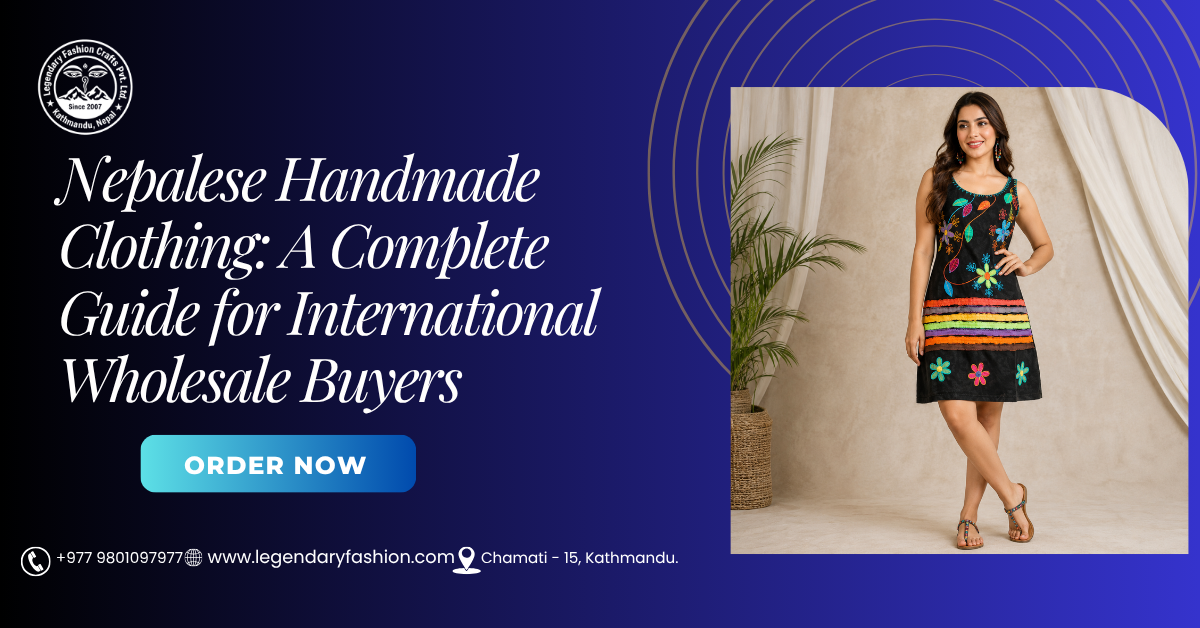
Nepalese handmade clothing has gained increasing attention among international fashion retailers, boutique owners, wholesalers, and ethical fashion brands looking for distinctive products with cultural character. From handcrafted cotton dresses and bohemian tops to traditional-inspired garments and unique hippie clothing, Nepal offers a diverse range of apparel for businesses seeking something different from mass-produced fashion.
For international wholesale buyers, sourcing Nepalese handmade clothing wholesale can provide access to unique designs, skilled craftsmanship, natural fabrics, and products that appeal to customers who value originality and handmade fashion.
However, buying clothing internationally requires more than finding attractive designs. Buyers need to understand product quality, materials, customization, minimum order quantities, pricing, production capacity, packaging, shipping, and supplier reliability.
This complete guide explains what international buyers should know before sourcing handmade clothing from Nepal.
What Is Nepalese Handmade Clothing?
Nepalese handmade clothing refers to garments produced using traditional craftsmanship, artisanal techniques, and, in many cases, hand-finishing methods. While not every garment is entirely handmade, many Nepalese clothing manufacturers combine traditional skills with modern production processes to maintain quality and meet wholesale requirements.
Common products include:
- Handmade cotton dresses
- Hippie and bohemian clothing
- Cotton tops and tunics
- Harem pants
- Handmade skirts
- Boho dresses
- Ethnic-inspired clothing
- Unisex garments
- Kids’ handmade clothing
- Festival and alternative fashion
- Hand-printed and hand-dyed garments
- Traditional Nepal-inspired apparel
These products are particularly popular with independent boutiques, festival clothing stores, ethical fashion retailers, online stores, and businesses specializing in bohemian or alternative fashion.
Why International Buyers Choose Nepalese Clothing
One of the biggest advantages of sourcing from Nepal is product individuality. International customers increasingly look for clothing that feels distinctive rather than identical to products available in large retail chains.
1. Unique Handmade Designs
Nepalese clothing often incorporates artistic patterns, earthy aesthetics, traditional influences, embroidery, prints, and relaxed silhouettes. These characteristics make the garments suitable for retailers looking to create a distinctive product collection.
2. Strong Craftsmanship
Nepal has a long tradition of textile and handicraft production. Skilled workers can create garments with detailed finishing and handcrafted elements that give products a more authentic appearance.
3. Natural and Comfortable Fabrics
Cotton is widely used in Nepalese clothing. Depending on the manufacturer and product, buyers may also find garments made with other natural or blended fabrics.
For international buyers, fabric composition should always be confirmed with the manufacturer before placing a wholesale order.
4. Bohemian and Hippie Fashion Appeal
Nepal is strongly associated with bohemian, hippie, ethnic, and alternative fashion. This gives Nepalese clothing manufacturers experience in producing styles that appeal to niche fashion markets.
5. Customization Opportunities
Many wholesale clothing manufacturers can offer customization depending on production capacity. Buyers may be able to request changes to colors, prints, sizing, fabrics, labels, packaging, or garment designs.
Popular Nepalese Handmade Clothing Categories
International wholesale buyers can source a broad range of products from Nepal.
Handmade Dresses
Handmade dresses are among the most popular Nepalese clothing products. Buyers can find casual dresses, boho dresses, summer dresses, printed dresses, loose-fitting styles, and festival-inspired designs.
Hippie Clothing
Nepalese hippie clothing is particularly attractive to specialty retailers. Harem pants, colorful tops, loose dresses, skirts, and relaxed-fit garments can work well for stores targeting alternative fashion customers.
Bohemian Clothing
Boho fashion is another important category. Flowing silhouettes, natural fabrics, artistic prints, embroidery, and earthy designs can complement boutique collections.
Cotton Clothing
Cotton garments are popular because they are lightweight, comfortable, and suitable for many climates. Wholesale buyers can source cotton dresses, tops, pants, skirts, and tunics.
Children’s Clothing
Some Nepalese manufacturers also produce handmade clothing for children. Buyers should pay close attention to sizing, fabric safety, stitching quality, buttons, cords, and applicable children’s clothing regulations in their destination market.
How to Choose a Nepalese Clothing Manufacturer
Selecting the right supplier is one of the most important steps in international wholesale sourcing.
Check the Manufacturer’s Experience
Look for a manufacturer with experience producing clothing for international wholesale customers. A supplier familiar with export orders is more likely to understand international packaging, documentation, quality expectations, and delivery requirements.
Review Product Quality
Before placing a large order, request samples whenever possible. Inspect:
- Fabric quality
- Stitching
- Seams
- Print quality
- Color consistency
- Measurements
- Finishing
- Buttons and accessories
- Washing instructions
- Overall construction
A sample gives you a much better understanding of what your customers will receive.
Ask About MOQ
MOQ means Minimum Order Quantity. Different Nepalese clothing manufacturers have different MOQs depending on the product, design, fabric, and customization requirements.
If you are a small boutique, look for suppliers offering manageable wholesale quantities. Larger retailers may negotiate better prices by placing higher-volume orders.
Confirm Production Capacity
A supplier may produce excellent samples but struggle with larger orders. Ask about production capacity and estimated lead times before committing to a major purchase.
Discuss Customization
If you want private-label clothing, ask whether the manufacturer can provide:
- Custom labels
- Brand tags
- Custom colors
- Custom prints
- Size modifications
- Custom packaging
- Special designs
- Hangtags
Always obtain written confirmation of customization specifications.
Understanding Wholesale Pricing
Wholesale clothing prices depend on several factors, including:
- Fabric type
- Garment complexity
- Handmade detailing
- Order quantity
- Customization
- Packaging
- Production time
- Shipping method
A lower unit price is not necessarily the best deal. International buyers should evaluate the total landed cost.
The landed cost may include the product price, packaging, freight, insurance where applicable, customs duties, taxes, clearance charges, and other import-related expenses.
Comparing suppliers based only on garment price can therefore produce misleading results.
Shipping Nepalese Clothing Internationally
Shipping is another important consideration for wholesale buyers.
Before placing an order, discuss:
- Shipping method
- Estimated transit time
- Shipping cost
- Export documentation
- Commercial invoice
- Packing list
- Country-of-origin information where required
- Customs requirements
- Import duties and taxes
- Delivery terms
Buyers should understand their responsibilities under the agreed shipping or Incoterms arrangement.
For larger wholesale shipments, sea or air freight may be appropriate depending on destination, urgency, shipment volume, and budget.
Quality Control for Wholesale Orders
Quality control becomes especially important when ordering hundreds or thousands of garments.
A professional supplier should have a process for checking products during production and before shipment.
International buyers can establish clear quality requirements covering:
- Acceptable measurement tolerance
- Fabric specifications
- Color standards
- Stitching quality
- Defect tolerance
- Label placement
- Packaging requirements
For larger orders, buyers may also consider independent inspection services before shipment.
Ethical and Sustainable Sourcing
Sustainability has become an important consideration for many fashion businesses. Customers increasingly want transparency about how their clothing is produced.
When sourcing Nepalese handmade clothing, ask suppliers about:
- Fabric sourcing
- Production practices
- Worker conditions
- Packaging materials
- Waste management
- Dyeing processes
- Handmade versus machine-made production
- Certifications, if claimed
Do not assume that a product is automatically sustainable simply because it is described as handmade or Nepalese. Request specific information from the manufacturer.
Tips for Building a Long-Term Supplier Relationship
International wholesale sourcing works best when buyers build reliable relationships with manufacturers rather than constantly changing suppliers.
Communicate your expectations clearly from the beginning. Provide accurate specifications, artwork, measurements, quantities, delivery requirements, and packaging instructions.
It is also helpful to maintain consistent ordering schedules. Manufacturers can often plan production more efficiently when they understand your expected purchasing volume.
Pay invoices on time, communicate changes early, and address quality concerns professionally. Strong supplier relationships can lead to better communication, smoother production, and more consistent quality.
Why Legendary Fashion Crafts Can Be a Wholesale Sourcing Partner
For businesses looking for Nepalese handmade clothing wholesale, Legendary Fashion Crafts offers a collection focused on handmade and Nepal-inspired fashion for international buyers.
The company operates from Kathmandu, Nepal, and serves wholesale customers looking for ladies’, gents’, and kids’ clothing. Its product range can be suitable for boutiques, fashion retailers, online stores, and businesses seeking distinctive Nepalese handmade apparel.
For wholesale buyers, the key is to communicate your requirements clearly and confirm product specifications, quantities, customization, pricing, and shipping arrangements before placing an order.
A Practical Checklist for International Buyers
Before confirming your first wholesale order, make sure you have checked:
- Supplier experience
- Product samples
- Fabric composition
- Size chart
- Product measurements
- Wholesale pricing
- MOQ
- Production lead time
- Customization options
- Private labeling
- Packaging
- Quality control
- Shipping method
- Export documentation
- Customs requirements
- Payment terms
- Return or defect policies
This checklist can help reduce misunderstandings and make the international sourcing process more predictable.
Final Thoughts
Nepalese handmade clothing offers international wholesale buyers an opportunity to build distinctive fashion collections around craftsmanship, cultural influence, comfortable fabrics, and bohemian design.
The right supplier can make a significant difference. Instead of focusing only on the lowest price, evaluate craftsmanship, consistency, production capacity, communication, customization, quality control, and international shipping capabilities.
Whether you operate a boutique, online fashion store, ethical clothing brand, festival clothing business, or wholesale distribution company, Nepalese handmade apparel can add character and variety to your product range.
By carefully evaluating suppliers and starting with samples before moving to larger orders, international buyers can develop reliable sourcing relationships and create a wholesale clothing collection that stands out in competitive fashion markets.
Frequently Asked Questions
1. What is Nepalese handmade clothing?
Nepalese handmade clothing includes garments produced using traditional craftsmanship, artisanal techniques, and handmade or hand-finished processes. Product categories include dresses, tops, pants, skirts, tunics, and bohemian clothing.
2. Can I buy Nepalese handmade clothing wholesale?
Yes. International retailers, boutiques, distributors, and online businesses can purchase Nepalese clothing in wholesale quantities from manufacturers and exporters.
3. What types of Nepalese clothing are popular internationally?
Popular categories include bohemian dresses, hippie clothing, cotton dresses, harem pants, tunics, skirts, printed garments, and other relaxed-fit handmade apparel.
4. What should I check before choosing a Nepal clothing manufacturer?
Check product quality, samples, MOQ, production capacity, customization options, lead times, pricing, export experience, packaging, and shipping arrangements.
5. Can Nepalese clothing manufacturers provide private labels?
Some manufacturers offer private-label services, including custom labels, tags, packaging, and other branding options. Buyers should confirm availability and additional costs with the supplier.
6. What is the minimum order quantity for Nepalese handmade clothing?
MOQ varies by manufacturer and product. Custom designs may require higher quantities, while selected ready-made wholesale styles may have lower MOQs.
7. How can I check the quality of Nepalese wholesale clothing?
Request samples before placing a large order and inspect fabric, stitching, measurements, prints, colors, finishing, and overall construction.
8. Can I customize Nepalese handmade clothing?
Depending on the manufacturer, customization may include colors, fabrics, prints, sizing, labels, packaging, and designs. Always confirm customization details before production.
9. How is Nepalese clothing shipped internationally?
Wholesale clothing can generally be shipped using air freight, courier services, or other international freight solutions depending on order size, destination, urgency, and budget.
10. Why should international buyers consider Nepalese handmade clothing?
Nepalese handmade clothing can provide unique designs, traditional craftsmanship, bohemian aesthetics, natural-fabric options, and opportunities for wholesale customization, making it attractive for boutiques and specialty fashion businesses.