
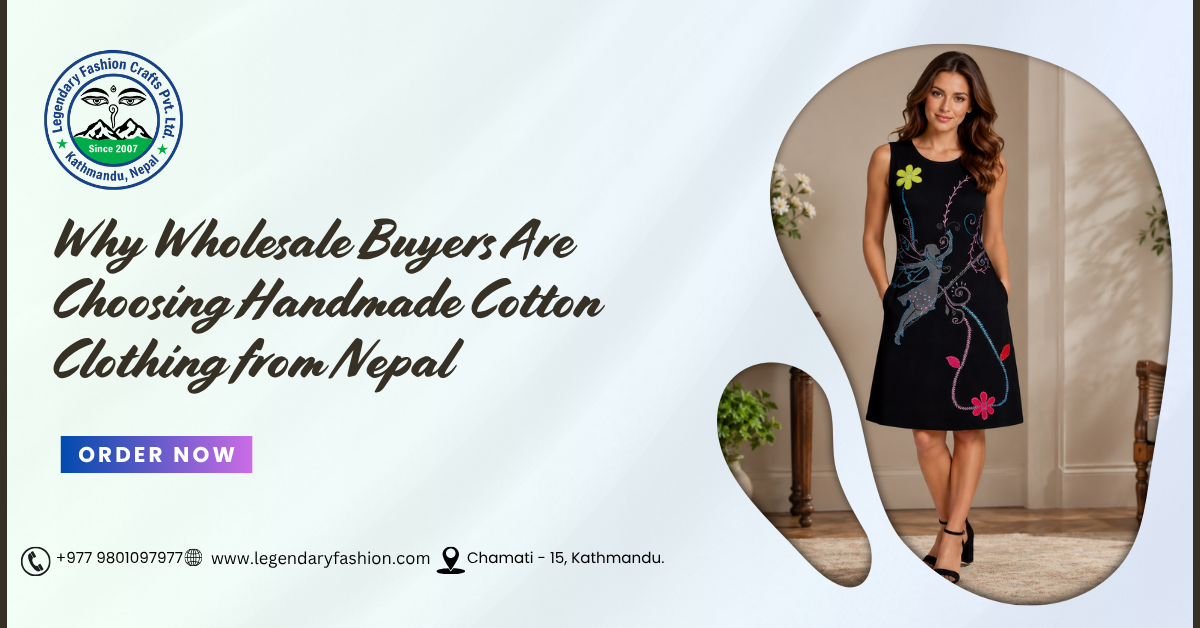
The global fashion industry is seeing a growing demand for clothing that combines comfort, craftsmanship, individuality, and responsible production. For wholesale buyers, retailers, boutique owners, fashion brands, and online sellers, this shift has created new opportunities to source distinctive products that stand apart from mass-produced fashion.
Handmade cotton clothing from Nepal has become an increasingly attractive choice for international wholesale buyers. Nepal has a long tradition of textile craftsmanship, handwork, natural fabrics, artistic designs, and small-scale garment production. When these traditional skills are combined with comfortable cotton fabrics and contemporary fashion trends, the result is clothing that appeals to customers looking for something different.
From casual dresses and tops to hippie clothing, bohemian apparel, shirts, skirts, and unique handmade garments, Nepalese cotton clothing offers retailers a broad range of wholesale opportunities.
In this guide, we explore why wholesale buyers are choosing handmade cotton clothing from Nepal and what makes Nepalese garments an interesting option for international fashion businesses.
1. High Demand for Comfortable Cotton Clothing
Comfort has become an important factor in modern fashion purchasing decisions. Customers increasingly look for clothing that is lightweight, breathable, versatile, and suitable for everyday wear.
Cotton naturally meets many of these requirements. It is comfortable against the skin and works well for casual and warm-weather clothing. This makes handmade cotton garments from Nepal particularly suitable for retailers serving customers interested in relaxed and comfortable fashion.
Wholesale buyers can source cotton dresses, tops, shirts, skirts, trousers, tunics, and other garments that can be marketed as comfortable everyday fashion.
For retailers, comfortable clothing also provides opportunities to serve multiple customer segments without depending entirely on seasonal trends.
2. Distinctive Handmade Designs
One of the biggest advantages of Nepalese handmade clothing is its distinctive character.
Unlike highly standardized mass-produced garments, handmade clothing can showcase traditional craftsmanship, decorative details, unique patterns, embroidery, printing techniques, and artistic influences.
Nepalese fashion is particularly recognized for its bohemian, hippie, ethnic, and relaxed aesthetic. These styles have strong appeal among customers who want clothing that expresses individuality.
For wholesale buyers, this uniqueness can help create a more recognizable product selection and reduce dependence on generic fashion products available from numerous suppliers.
3. Strong Appeal of Bohemian and Hippie Fashion
Boho and hippie fashion continues to attract customers who prefer relaxed silhouettes, artistic designs, earthy aesthetics, and culturally inspired clothing.
Nepal has long been associated with alternative, bohemian, and hippie-inspired fashion. This has helped Nepalese manufacturers and artisans develop experience in producing garments that fit these categories.
Wholesale buyers looking for Nepal hippie clothing wholesale, bohemian dresses, ethnic cotton garments, and festival-inspired fashion can find products that naturally align with these customer preferences.
Boutiques, festival clothing stores, resort shops, lifestyle retailers, and online fashion stores can use these garments to build collections around a distinctive visual identity.
4. Traditional Craftsmanship Adds Product Value
Handmade clothing offers something beyond the basic function of apparel: craftsmanship.
Many Nepalese garments incorporate traditional techniques and handmade details. These elements can make a garment feel more special compared with ordinary factory-made clothing.
For wholesale buyers, craftsmanship can become part of the product story. Retailers can explain the handmade nature of a garment, its Nepalese origin, fabric characteristics, and design inspiration to customers.
A strong product story can also support premium positioning when the quality, workmanship, and overall product presentation justify it.
5. Unique Products Help Retailers Stand Out
Competition in the fashion market is intense. Online marketplaces allow customers to compare thousands of similar products within seconds.
This makes product differentiation extremely important.
Nepalese handmade cotton clothing gives retailers an opportunity to offer products with distinctive designs, textures, silhouettes, and cultural influences.
Instead of competing only on price, retailers can compete through uniqueness, craftsmanship, design, and brand identity.
This can be especially useful for independent boutiques and niche fashion businesses that want a carefully selected product range rather than a large collection of generic garments.
6. Suitable for Boutique and Lifestyle Retailers
Handmade cotton clothing from Nepal is well suited to boutique businesses.
Boutiques often focus on carefully selected products rather than mass-market fashion. Their customers may actively seek unusual designs, artisan-made products, natural fabrics, and culturally inspired fashion.
Nepalese cotton garments can fit naturally into boutique collections featuring:
- Bohemian fashion
- Hippie clothing
- Festival wear
- Resort clothing
- Casual cotton apparel
- Ethnic-inspired fashion
- Artisan clothing
- Sustainable fashion collections
- Travel-inspired clothing
Wholesale sourcing allows these businesses to purchase multiple pieces at competitive wholesale rates while developing a distinctive retail collection.
7. Flexible Product Selection for International Buyers
Another reason buyers consider Nepal is the variety of clothing styles available.
Depending on the manufacturer and collection, wholesale buyers may source products such as cotton dresses, tunics, tops, skirts, shirts, pants, jackets, and other handmade garments.
This variety makes it possible for buyers to create coordinated collections instead of purchasing a single type of product.
For an international retailer, having multiple product categories from a reliable Nepal clothing manufacturer can simplify sourcing and help maintain a consistent brand aesthetic.
8. Handmade Clothing Supports a More Personal Product Story
Today’s customers often want to know more about the products they purchase.
They may be interested in where a garment was made, what materials were used, how it was produced, and what makes it different from conventional clothing.
Handmade Nepalese garments can provide retailers with a compelling origin story.
A retailer can highlight the garment’s Nepalese craftsmanship, cotton fabric, handmade production process, design inspiration, and artisan influence.
This storytelling can be incorporated into product descriptions, packaging, social media content, and in-store displays.
9. Attractive Opportunity for Niche Fashion Businesses
Not every fashion business wants to sell mainstream clothing.
Some retailers focus on specific customer groups looking for alternative, artistic, ethnic, spiritual, festival, travel, or bohemian fashion.
For these businesses, Nepal can be an interesting sourcing destination.
Wholesale Nepal clothing suppliers can provide products that align with niche fashion categories and allow businesses to build collections around a recognizable theme.
Niche positioning can also help retailers establish a stronger connection with their target audience because customers know what type of products the store specializes in.
10. Wholesale Sourcing Can Support Better Margins
Wholesale buying allows retailers to purchase garments in larger quantities at wholesale pricing rather than individual retail prices.
When products are carefully selected and appropriately priced for the target market, retailers can create room for healthy margins.
However, buyers should evaluate the complete landed cost rather than looking only at the factory or wholesale price. Shipping, customs duties, taxes, packaging, payment charges, and other import costs may affect the final cost.
A professional wholesale buyer should therefore compare suppliers based on quality, consistency, pricing, minimum order quantities, production capacity, lead times, and export support.
11. Suitable for International Fashion Trends
Although Nepalese clothing is influenced by traditional craftsmanship, modern manufacturers can also produce garments designed for international customers.
This combination of traditional inspiration and contemporary silhouettes can make handmade cotton clothing relevant to modern fashion retailers.
Wholesale buyers can select products based on their target market’s preferred colors, sizes, patterns, lengths, fits, and seasonal requirements.
Before placing a large order, buyers should request product samples and clearly communicate their specifications with the manufacturer.
12. Nepal Offers an Interesting Alternative to Mass-Market Sourcing
International buyers often source garments from multiple countries to diversify their supply chain.
Nepal can provide an alternative for businesses looking specifically for handmade, artisan-inspired, cotton, bohemian, and culturally influenced apparel.
Rather than trying to compete directly with high-volume mass manufacturing, Nepalese clothing manufacturers can offer value through craftsmanship, product character, and specialized garment production.
For retailers whose customers appreciate unique fashion, this difference can be commercially meaningful.
What Should Wholesale Buyers Look for in a Nepal Clothing Manufacturer?
Choosing the right supplier is essential when sourcing handmade cotton clothing internationally.
Before placing an order, buyers should evaluate:
Product quality: Check fabric quality, stitching, finishing, color consistency, and durability.
Sampling: Request samples before committing to a large wholesale order.
Production capacity: Confirm whether the manufacturer can consistently produce the required quantity.
Customization: Ask whether colors, prints, sizes, designs, labels, or packaging can be customized.
MOQ: Understand the minimum order quantity for each product or design.
Lead time: Confirm production and shipping timelines before ordering.
Export experience: An experienced exporter is more likely to understand international wholesale requirements.
Communication: Clear and timely communication is essential for international sourcing.
Quality control: Ask how products are inspected before shipment.
For businesses seeking a reliable partner, working directly with an established Nepalese clothing manufacturer and wholesaler can make the sourcing process more efficient.
Why Choose Legendary Fashion Crafts for Wholesale Nepalese Clothing?
For wholesale buyers searching for handmade cotton clothing from Nepal, Legendary Fashion Crafts offers a wide range of Nepalese handmade apparel for international wholesale markets.
The company focuses on manufacturing, wholesaling, and exporting clothing for ladies, gents, and kids. Its product range includes fashion styles suited to customers looking for handmade, bohemian, hippie, casual, and culturally inspired apparel.
For retailers, boutiques, fashion distributors, and international clothing businesses, direct wholesale sourcing can provide access to unique Nepalese garments while building a consistent product collection.
Buyers should discuss their requirements directly with the manufacturer, including product categories, quantities, sizes, designs, customization requirements, shipping destinations, and delivery schedules.
Conclusion
The growing interest in handmade cotton clothing from Nepal reflects a wider change in consumer fashion preferences. Customers are increasingly interested in comfort, individuality, craftsmanship, unique designs, and meaningful product stories.
For wholesale buyers, Nepalese clothing can offer a combination of comfortable cotton fabrics, handmade details, distinctive bohemian and hippie styles, and boutique-friendly designs.
Whether you operate a fashion boutique, online clothing store, lifestyle shop, resort business, festival fashion brand, or wholesale distribution company, Nepalese handmade clothing can provide an opportunity to build a differentiated product range.
The key is to choose a dependable Nepal clothing manufacturer and wholesale supplier, verify product quality, understand costs and minimum order quantities, and establish clear communication before placing bulk orders.
With the right supplier, handmade cotton clothing from Nepal can become a valuable addition to an international fashion collection.
Frequently Asked Questions
1. Why is handmade cotton clothing from Nepal popular among wholesale buyers?
Handmade cotton clothing from Nepal is popular because it combines comfortable fabrics with distinctive designs, traditional craftsmanship, bohemian styles, and handmade details that can help retailers differentiate their collections.
2. What types of Nepalese cotton clothing can wholesalers buy?
Depending on the manufacturer, wholesale buyers can source cotton dresses, tops, shirts, skirts, trousers, tunics, jackets, hippie clothing, bohemian apparel, and other handmade garments.
3. Is Nepalese handmade clothing suitable for boutiques?
Yes. Its unique designs, artisan-inspired details, relaxed styles, and cultural influences make Nepalese handmade clothing particularly suitable for boutiques and niche fashion retailers.
4. Can international buyers order Nepalese clothing wholesale?
Yes. International buyers can work with Nepalese manufacturers and exporters to purchase clothing in wholesale quantities. Buyers should confirm shipping, customs, payment, MOQ, and production requirements with their chosen supplier.
5. Can handmade cotton garments be customized?
Customization depends on the manufacturer. Some suppliers may offer customized colors, sizes, prints, designs, labels, and other production specifications for wholesale orders.
6. What is the minimum order quantity for Nepal clothing wholesale?
MOQ varies by manufacturer, garment style, customization requirements, and order specifications. Wholesale buyers should request the current MOQ directly from the supplier.
7. How can I find a reliable Nepal clothing manufacturer?
Look for a manufacturer with consistent product quality, clear communication, export experience, transparent pricing, suitable production capacity, quality control procedures, and positive business references.
8. Is Nepalese handmade clothing suitable for online fashion stores?
Yes. Unique handmade clothing can work well for online stores because distinctive designs and product stories can help attract customers and differentiate the store from mass-market competitors.
9. What should I check before placing a bulk clothing order from Nepal?
Request samples, verify fabric and stitching quality, confirm measurements and sizing, review MOQ and pricing, understand production timelines, calculate shipping and import costs, and clarify payment and quality-control procedures.
10. Where can I buy handmade cotton clothing wholesale from Nepal?
International wholesale buyers can source directly from Nepalese manufacturers and exporters such as Legendary Fashion Crafts. Buyers can contact the supplier to discuss wholesale collections, product availability, quantities, customization, and export requirements.