
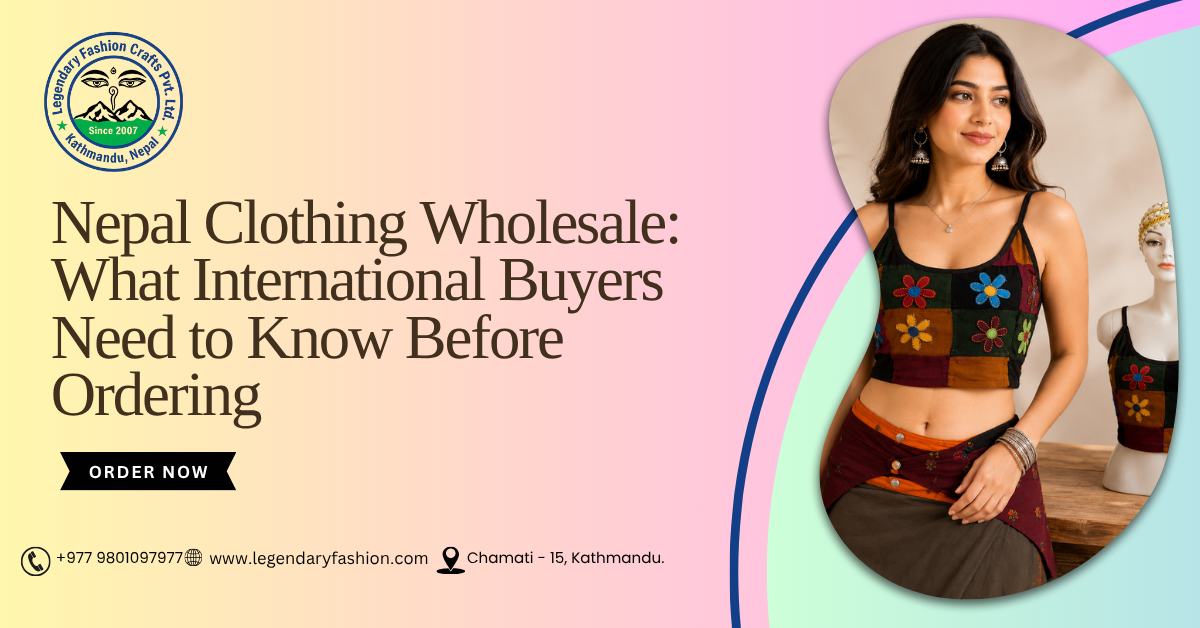
Nepal has become an interesting sourcing destination for international clothing buyers looking for handmade garments, ethical production, distinctive designs, and flexible wholesale manufacturing. From handmade cotton dresses and boho clothing to trousers, jackets, skirts, tops, and woolen products, Nepalese garment manufacturers offer a wide range of products for international fashion businesses.
However, ordering clothing wholesale from Nepal requires more than simply selecting products and discussing prices. International buyers need to understand product quality, minimum order quantities, fabric selection, customization, production timelines, packaging, shipping, customs, and supplier communication before placing an order.
For retailers, fashion brands, importers, and distributors, understanding these factors can make the sourcing process smoother and help establish reliable long-term relationships with Nepalese clothing manufacturers.
Why Buy Clothing Wholesale From Nepal?
Nepal has a strong tradition of textile production and handmade craftsmanship. Many manufacturers and workshops combine traditional techniques with contemporary fashion requirements to create clothing suitable for international markets.
One important advantage is product variety. Wholesale buyers can source dresses, skirts, trousers, tops, jackets, dungarees, wrap-around skirts, natural fabric clothing, tie-dye garments, and woolen products from Nepal.
Nepalese clothing can also be attractive to brands that focus on handmade, bohemian, sustainable, ethnic, natural, and artisan-inspired fashion.
For international buyers, some common advantages include:
- Handmade and artisan-inspired designs
- Flexible product customization
- Natural and cotton-based fabrics
- Small and medium wholesale production
- Unique Nepal-inspired designs
- Competitive manufacturing costs for selected products
- Experience supplying international markets
- Opportunities for private-label production
Understand the Nepal Clothing Wholesale Market
Before contacting a supplier, international buyers should understand what type of clothing they need and which market they are targeting.
A boutique selling bohemian fashion may require completely different products from a retailer specializing in casual everyday clothing. Similarly, an Australian fashion brand may have different fabric and sizing requirements compared with a European or North American buyer.
Create a clear sourcing brief that includes:
- Product category
- Target customer
- Fabric preference
- Size range
- Color requirements
- Estimated order quantity
- Target price
- Branding requirements
- Packaging requirements
- Delivery destination
A detailed brief allows manufacturers to provide more accurate quotations and production estimates.
Choose the Right Clothing Manufacturer
Selecting a suitable clothing manufacturer is one of the most important parts of wholesale sourcing from Nepal.
Do not choose a supplier only because they offer the lowest price. A reliable manufacturer should be able to demonstrate product quality, production capability, communication standards, and experience with wholesale orders.
Before placing an order, ask the manufacturer about:
- Product samples
- Factory or workshop capabilities
- Production capacity
- Minimum order quantity
- Fabric sourcing
- Quality control procedures
- Customization options
- Previous export experience
- Packaging
- Production timelines
- Shipping arrangements
For larger orders, buyers may also request company information, product catalogs, sample pieces, and references where available.
Check Product Quality Before Bulk Ordering
A product photograph cannot provide enough information about garment quality. International buyers should request samples before confirming a large wholesale order.
Inspect the sample carefully for stitching, fabric quality, measurements, finishing, color consistency, buttons, zippers, seams, embroidery, printing, and overall construction.
If the buyer has a specific quality standard, it should be communicated before production begins.
A sample approval process can help reduce misunderstandings. The approved sample can serve as a reference during bulk production.
Understand Minimum Order Quantities
Minimum order quantity, commonly called MOQ, is an important consideration when buying wholesale clothing from Nepal.
Different manufacturers may have different MOQs depending on the product, fabric, design, and production process.
For example, a manufacturer may accept smaller quantities for existing designs but require higher quantities for completely customized garments.
Ask the supplier:
- What is the MOQ per design?
- Is the MOQ calculated per color or total quantity?
- Is there a separate MOQ for custom fabrics?
- Can multiple sizes be included in one order?
- Can colors be mixed within the MOQ?
Understanding these details before ordering can help buyers calculate their actual purchasing costs.
Discuss Fabric and Material Specifications
Fabric choice directly affects garment appearance, comfort, durability, and price.
International buyers should confirm the exact material composition before approving production. Depending on the product, buyers may request cotton, rayon, linen, wool, hemp blends, or other materials.
Ask for details such as:
- Fabric composition
- Fabric weight
- Texture
- Shrinkage
- Colorfastness
- Washing requirements
- Country of fabric origin, when relevant
If the clothing will be sold in a market with specific textile labeling requirements, buyers should also confirm the information that needs to appear on garment labels.
Confirm Customization and Private Label Options
Many international fashion brands prefer customized products rather than purchasing standard wholesale designs.
Depending on the manufacturer, customization may include:
- Custom colors
- Custom measurements
- Fabric changes
- Logo embroidery
- Printed labels
- Woven labels
- Hangtags
- Packaging
- Custom patterns
- Design modifications
Buyers should discuss customization requirements before production begins. Changes introduced after production has started can increase costs and cause delays.
For private-label clothing, provide the supplier with clear branding specifications and artwork files in the required format.
Know the Production Timeline
Production time varies according to order quantity, product complexity, material availability, customization, and the manufacturer’s current workload.
A typical wholesale order may involve several stages:
- Product selection
- Price quotation
- Sample development
- Sample approval
- Order confirmation
- Material sourcing
- Production
- Quality inspection
- Packaging
- Shipment
Ask for an estimated timeline for each stage rather than relying only on a single delivery date.
International buyers should also allow additional time for international transportation, customs clearance, and possible delays.
Understand Pricing and Payment Terms
Wholesale garment pricing depends on many factors, including fabric, design complexity, order volume, labor, customization, packaging, and shipping requirements.
When comparing quotations, make sure suppliers are quoting on the same basis.
Ask whether the quoted price includes:
- Garment production
- Labels
- Packaging
- Customization
- Local transportation
- Export-related costs
- International shipping
Also clarify payment terms, deposit requirements, balance payment, accepted payment methods, and the conditions under which production begins.
A low unit price may not represent the lowest overall sourcing cost if additional charges are excluded.
Plan International Shipping and Customs
Shipping from Nepal to another country involves more than transportation alone. Buyers should understand the shipping method, documentation, customs requirements, import duties, and taxes applicable in their destination country.
Depending on order size and urgency, buyers may consider air freight, courier services, or other international shipping options.
Before shipment, confirm documentation such as:
- Commercial invoice
- Packing list
- Shipping documents
- Product details
- Country of origin information
- Any required certificates
Import regulations differ between countries. Buyers should check their own country’s requirements before placing a commercial order.
Quality Control Before Shipment
Quality control should be treated as an essential part of the wholesale purchasing process.
Before the garments leave Nepal, the buyer or supplier should verify:
- Correct quantities
- Correct sizes
- Color accuracy
- Stitching quality
- Measurements
- Labels
- Packaging
- Product defects
- Customization requirements
For larger orders, buyers may consider arranging a pre-shipment inspection or requesting detailed photographs and videos of completed products.
Build a Long-Term Supplier Relationship
Wholesale clothing sourcing works best when buyers and manufacturers develop clear and consistent communication.
Once you find a manufacturer that meets your quality and production requirements, maintaining a long-term relationship can make future orders easier.
Share updated specifications, provide clear feedback, confirm approvals in writing, and maintain accurate records of previous orders.
For international fashion brands, a dependable Nepalese clothing manufacturer can become a valuable long-term production partner.
Why Choose Legendary Fashion Crafts for Wholesale Clothing From Nepal?
Legendary Fashion Crafts Pvt. Ltd. is a Nepal-based garment manufacturer serving wholesale and international clothing requirements.
The company works with a wide range of clothing categories, including handmade ladies clothing, dresses, trousers, skirts, tops, jackets, dungarees, wrap-around skirts, shorts, children’s collections, natural collections, tie-dye clothing, and woolen goods.
For international buyers, the sourcing process can begin by discussing product requirements, quantities, customization, fabrics, pricing, and delivery expectations. Clear communication at the beginning helps ensure that the final production matches the buyer’s requirements.
Final Thoughts
Buying Nepal clothing wholesale can provide international fashion businesses with access to distinctive designs, handmade craftsmanship, flexible production options, and diverse garment categories. However, successful sourcing depends on careful supplier selection, sample approval, clear specifications, quality control, transparent pricing, and proper shipping preparation.
International buyers should avoid rushing into large orders without first checking samples, MOQ, production capacity, material specifications, payment terms, and delivery requirements.
With proper planning and communication, sourcing clothing from Nepal can become a reliable part of an international fashion brand’s supply chain.
Frequently Asked Questions
1. What types of clothing can international buyers source wholesale from Nepal?
International buyers can source dresses, trousers, skirts, tops, jackets, dungarees, shorts, wrap-around skirts, children’s clothing, tie-dye garments, natural fabric collections, and woolen products.
2. Is Nepal suitable for small wholesale clothing orders?
Some Nepalese manufacturers accept small and medium-sized wholesale orders, although the minimum order quantity varies by supplier, product, fabric, and customization requirements.
3. Can I order custom clothing from a Nepalese manufacturer?
Yes. Depending on the manufacturer, buyers may request custom designs, fabrics, colors, measurements, labels, embroidery, printing, and packaging.
4. Should I request samples before placing a wholesale order?
Yes. A sample allows buyers to evaluate fabric, stitching, measurements, finishing, colors, and overall product quality before committing to bulk production.
5. What affects wholesale clothing prices in Nepal?
Prices can depend on fabric, garment design, order quantity, labor, customization, accessories, packaging, and other production requirements.
6. How long does wholesale clothing production take in Nepal?
Production time varies according to product type, quantity, customization, material availability, and the manufacturer’s workload. Buyers should confirm the estimated production schedule before ordering.
7. Can Nepalese clothing manufacturers provide private-label services?
Many manufacturers can support private-label requirements, such as custom labels, tags, branding, packaging, and other specifications. Buyers should confirm available services with the manufacturer.
8. How should international buyers check garment quality?
Buyers can request samples, review measurements and material specifications, approve a production sample, and conduct quality checks before shipment.
9. What documents may be required when importing clothing from Nepal?
Depending on the destination country and shipment, documents may include commercial invoices, packing lists, shipping documents, and country of origin information. Importers should verify their country’s specific requirements.
10. How can I find a reliable wholesale clothing manufacturer in Nepal?
Start by reviewing the manufacturer’s product range, requesting samples, confirming MOQ and production capacity, discussing customization, checking communication standards, and clearly documenting pricing and delivery terms before placing a bulk order.