
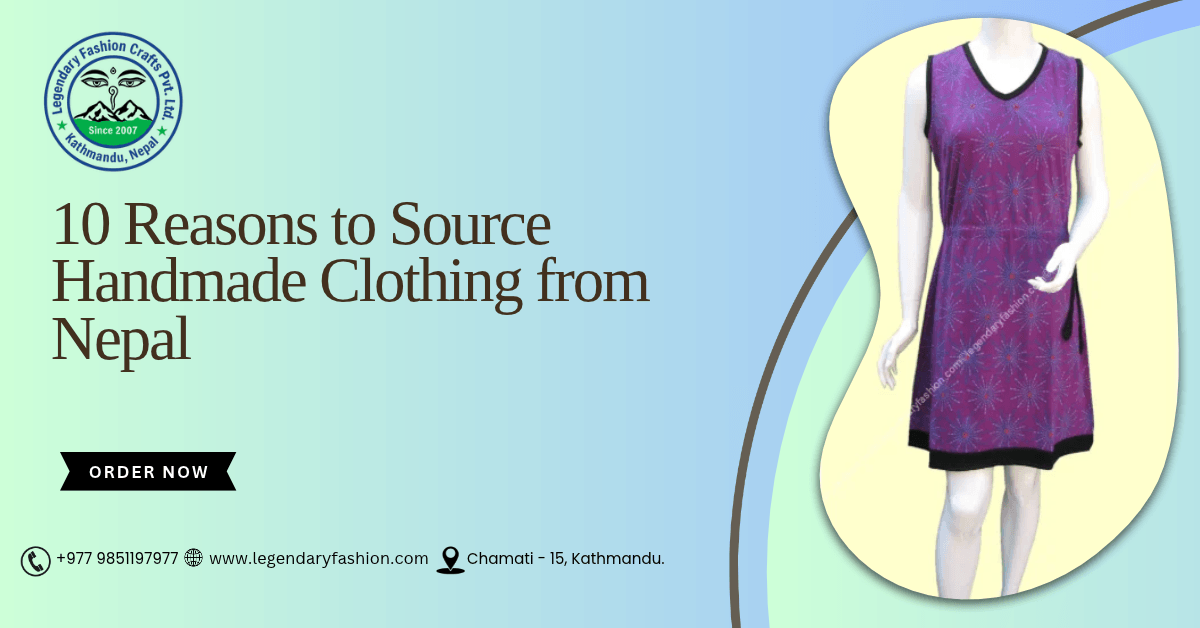
Nepal is widely known for its rich cultural heritage, traditional craftsmanship, and diverse textile traditions. Over the years, handmade clothing from Nepal has gained attention among international buyers, fashion retailers, boutique owners, wholesalers, and ethical fashion brands looking for distinctive products with a strong cultural identity.
For businesses seeking unique apparel for wholesale, private label, retail, or export markets, Nepal offers several advantages. From skilled artisans and traditional techniques to sustainable production and customizable designs, sourcing handmade clothing from Nepal can help businesses build a distinctive product collection.
Legendary Fashion Crafts is a Nepal-based manufacturer and supplier of handmade clothing and textile products, serving buyers looking for quality garments and reliable bulk sourcing from Nepal.
Here are 10 important reasons to consider sourcing handmade clothing from Nepal.
1. Rich Heritage of Handmade Textile Production
Nepal has a long tradition of textile and garment craftsmanship. Many artisans have developed their skills through generations, preserving traditional techniques and methods that give Nepalese handmade clothing its distinctive character.
Traditional weaving, knitting, embroidery, dyeing, crochet, and other forms of textile craftsmanship are still practiced across different communities.
For international buyers, this heritage creates an opportunity to source garments that have a genuine connection to Nepalese culture rather than mass-produced clothing that looks similar to products available worldwide.
Handmade apparel can include distinctive patterns, textures, embroidery, natural-looking finishes, and traditional influences that add value to a fashion collection.
2. Unique Designs and Handmade Finishing
One of the biggest benefits of sourcing handmade clothing from Nepal is the uniqueness of the products.
Unlike highly standardized factory-made garments, handmade clothing often has individual characteristics created through manual craftsmanship. Small details in embroidery, stitching, dyeing, weaving, and finishing can make each product feel distinctive.
Nepalese handmade clothing can be particularly suitable for:
- Boutique fashion stores
- Ethical fashion brands
- Bohemian clothing retailers
- Cultural fashion collections
- Handmade clothing stores
- Online fashion businesses
- Festival and resort wear collections
- Sustainable fashion brands
For retailers, distinctive designs can help create a stronger product identity and differentiate their collections from mass-market apparel.
3. Skilled Nepalese Artisans
Skilled artisans are an important part of Nepal’s handmade textile industry. Their knowledge of traditional techniques allows manufacturers to produce garments that require careful attention to detail.
Handmade clothing production can involve several stages, including fabric preparation, cutting, stitching, embroidery, dyeing, embellishment, and finishing.
Experienced artisans understand how to work with different fabrics, textures, colors, and decorative techniques. This craftsmanship can contribute to the appearance, comfort, and overall quality of handmade garments.
When international buyers source from an experienced Nepalese manufacturer, they can benefit from this combination of traditional skills and organized production.
4. Sustainable and Responsible Fashion Opportunities
Sustainability has become an important consideration for many fashion businesses and consumers. Handmade clothing can support more responsible approaches to apparel production when appropriate materials and production methods are used.
Many handmade garments are produced using labor-intensive processes rather than highly automated manufacturing. Depending on the product and materials selected, businesses may also source garments made with natural fibers, recycled materials, low-impact dyes, or traditional textile techniques.
For brands developing an environmentally conscious product line, handmade clothing from Nepal can complement their sustainability goals.
However, businesses should always verify the specific materials, production methods, certifications, and sustainability claims of their supplier before making environmental claims about a product.
5. Access to Distinctive Natural and Handmade Materials
Nepalese textile production is associated with a variety of natural and handmade materials. Depending on the manufacturer and product category, buyers may find garments made using cotton, wool, hemp, recycled fabrics, and other textile materials.
These materials can provide different textures and appearances for fashion collections.
For example, handmade woolen garments can be suitable for colder markets, while lightweight cotton and other breathable fabrics can work well for casual and warm-weather collections.
A reliable manufacturer can help buyers identify suitable fabrics and materials based on the intended market, product design, season, and target customer.
6. Customization for Wholesale and International Buyers
Another reason to source handmade clothing from Nepal is the potential for product customization.
Depending on the manufacturer, buyers may be able to discuss requirements such as:
- Product design
- Fabric selection
- Colors
- Sizes
- Patterns
- Embroidery
- Labels
- Packaging
- Finishing details
- Private labeling
Customization is especially valuable for fashion brands that want to develop exclusive collections rather than simply resell standard products.
Before placing a large order, buyers should discuss minimum order quantities, sample development, customization charges, production timelines, and quality standards with the manufacturer.
7. Competitive Sourcing for Boutique and Wholesale Businesses
Cost is an important consideration when sourcing apparel internationally. Nepal can offer competitive sourcing opportunities for businesses interested in handmade garments and textile products.
The final price depends on factors such as fabric, design complexity, labor requirements, order quantity, customization, packaging, and shipping destination.
For boutique owners and wholesalers, purchasing directly from a manufacturer can help create a more efficient supply chain compared with purchasing through multiple intermediaries.
Businesses should compare suppliers based on overall value rather than focusing only on the lowest price. Product quality, communication, consistency, production capacity, packaging, and delivery reliability are equally important.
8. Strong Cultural Identity and Storytelling Value
Modern consumers often want to know more about where their clothing comes from and how it is produced.
Handmade clothing from Nepal can provide a strong story around craftsmanship, culture, traditional techniques, and artisan skills.
This storytelling value can be useful for fashion brands that want to communicate the background of their products.
For example, a retailer can explain the origin of a handmade garment, the textile technique used to produce it, the type of material selected, and the craftsmanship involved in finishing the product.
Authentic product stories can make a collection more engaging and help customers understand why handmade products may differ from conventional mass-produced garments.
9. Suitable for European and International Fashion Markets
Nepalese handmade clothing can be suitable for a variety of international markets, including Europe, North America, Australia, and other regions.
European buyers in particular may look for distinctive handmade products, sustainable fashion options, ethical sourcing, and culturally inspired designs.
Popular product categories can include handmade dresses, trousers, tops, jackets, outerwear, crochet garments, embroidered clothing, tie-dye apparel, and other textile products.
However, exporters and buyers must ensure that products meet the applicable requirements of their destination market. These can include labeling, textile composition information, product safety requirements, packaging rules, customs documentation, and other import regulations.
Working with an experienced export supplier can make the sourcing process easier.
10. Direct Partnership with a Nepalese Manufacturer
Working directly with a Nepalese handmade clothing manufacturer can provide advantages throughout the sourcing process.
Instead of purchasing through multiple trading companies, international buyers can communicate directly with the production team about designs, samples, pricing, order quantities, quality requirements, and delivery schedules.
Direct communication can also make it easier to develop long-term business relationships.
Legendary Fashion Crafts works with buyers interested in sourcing handmade clothing and textile products from Nepal. The company can support businesses looking for products suitable for wholesale, retail, export, and customized collections.
For buyers planning regular orders, building a long-term relationship with a reliable manufacturer can improve consistency and make future product development easier.
What Should You Consider Before Sourcing Handmade Clothing from Nepal?
Although Nepal offers many opportunities for handmade clothing sourcing, buyers should conduct proper supplier research before placing an order.
Consider the following factors:
Product Quality
Request samples before confirming a large production order. Check stitching, fabric quality, measurements, colors, embroidery, finishing, and overall workmanship.
Minimum Order Quantity
Ask about the manufacturer’s minimum order quantity for standard and customized products. Handmade products may have different MOQs depending on the design and production process.
Production Capacity
Confirm whether the manufacturer can handle your required order volume and repeat orders without compromising quality.
Customization
If you need private-label or customized products, discuss design specifications, labels, packaging, fabrics, colors, and other requirements before production begins.
Lead Time
Ask how long sampling and bulk production will take. Production time can vary depending on order size, product complexity, materials, and season.
Export and Shipping
Discuss shipping options, documentation, packaging, delivery terms, and responsibilities for international transportation.
Communication
Clear communication is essential for international sourcing. A reliable supplier should be able to provide accurate information about products, prices, samples, production, and shipping.
Why Choose Legendary Fashion Crafts?
Legendary Fashion Crafts is based in Kathmandu, Nepal, and specializes in handmade clothing and textile products for domestic and international buyers.
The company focuses on combining Nepalese craftsmanship with products suitable for modern fashion businesses.
International buyers can work with Legendary Fashion Crafts for wholesale sourcing, bulk orders, customized products, and export-oriented clothing requirements.
The company is located at Chamati-15, Kathmandu, Nepal.
For businesses interested in sourcing handmade clothing from Nepal, establishing direct communication with the manufacturer can be a practical first step toward developing a reliable supply relationship.
How to Start Sourcing Handmade Clothing from Nepal
Starting the sourcing process does not have to be complicated. Begin by identifying the type of clothing you want to purchase and define your target market.
Prepare basic requirements such as:
- Product category
- Estimated order quantity
- Preferred fabrics
- Desired colors
- Size range
- Target price
- Customization requirements
- Private-label requirements
- Destination country
- Expected delivery schedule
Next, contact the manufacturer and request product information, photographs, pricing, and samples where applicable.
After reviewing samples, discuss quality requirements and finalize the product specifications. Once both parties agree on the price, quantity, production schedule, and shipping terms, the bulk production process can begin.
Building a long-term relationship with a dependable manufacturer can make future sourcing more efficient.
Conclusion
Sourcing handmade clothing from Nepal can provide fashion businesses with access to skilled craftsmanship, distinctive designs, cultural authenticity, customizable products, and diverse textile options.
From traditional artisan techniques to modern wholesale production, Nepal offers opportunities for retailers, wholesalers, boutique owners, and international fashion brands looking for products with a unique identity.
The key to successful sourcing is choosing the right manufacturer and clearly communicating your requirements. Buyers should evaluate product quality, pricing, minimum order quantities, customization options, production capacity, shipping, and export requirements before placing an order.
For businesses looking to source handmade clothing directly from Nepal, Legendary Fashion Crafts can be a potential manufacturing and sourcing partner for wholesale and international orders.
Interested in sourcing handmade clothing from Nepal? Contact Legendary Fashion Crafts to discuss your product requirements, bulk orders, and customized clothing needs.
Location: Chamati-15, Kathmandu, Nepal
Website: www.legendaryfashion.com
Contact: +977-9801097977
Frequently Asked Questions
1. Why should I source handmade clothing from Nepal?
Nepal offers skilled artisans, traditional textile craftsmanship, distinctive designs, customizable products, and access to handmade clothing suitable for wholesale and international fashion markets.
2. What types of handmade clothing can I source from Nepal?
Depending on the manufacturer, buyers can source handmade dresses, trousers, tops, jackets, outerwear, embroidered garments, crochet clothing, tie-dye products, woolen apparel, and other textile products.
3. Can I order handmade clothing from Nepal in bulk?
Yes. Many Nepalese manufacturers supply products for wholesale and bulk orders. Buyers should confirm the minimum order quantity and production capacity before placing an order.
4. Can I customize handmade clothing from Nepal?
Customization may be available depending on the manufacturer and product. Buyers can discuss fabrics, colors, designs, sizes, embroidery, labels, packaging, and other specifications.
5. Is Nepal suitable for sourcing clothing for European markets?
Nepal can be a suitable sourcing destination for European fashion businesses looking for handmade and culturally inspired clothing. Buyers should ensure that products comply with the applicable European import, textile labeling, safety, and other regulatory requirements.
6. Can I request samples before placing a bulk order?
Yes. Requesting samples is recommended before confirming a large order. Samples allow buyers to evaluate fabric, stitching, measurements, colors, workmanship, and overall product quality.
7. What is the minimum order quantity for handmade clothing in Nepal?
Minimum order quantities vary by manufacturer and product. Customized products may have different MOQs from standard designs, so buyers should confirm the requirement directly with the supplier.
8. How can I find a reliable handmade clothing manufacturer in Nepal?
Look for a manufacturer with relevant production experience, clear communication, consistent product quality, reasonable MOQs, customization capabilities, and experience handling wholesale or international orders. Request samples and verify production and export capabilities before committing to a large order.
9. Can handmade clothing manufacturers in Nepal export products internationally?
Yes. Nepalese clothing manufacturers and exporters can supply products to international markets. Buyers should discuss shipping, customs documentation, packaging, delivery terms, and destination-country requirements with the supplier.
10. How can I contact Legendary Fashion Crafts for wholesale clothing?
You can contact Legendary Fashion Crafts for wholesale, bulk, customized, and export clothing requirements through +977-9801097977 or visit www.legendaryfashion.com. The company is located at Chamati-15, Kathmandu, Nepal.