
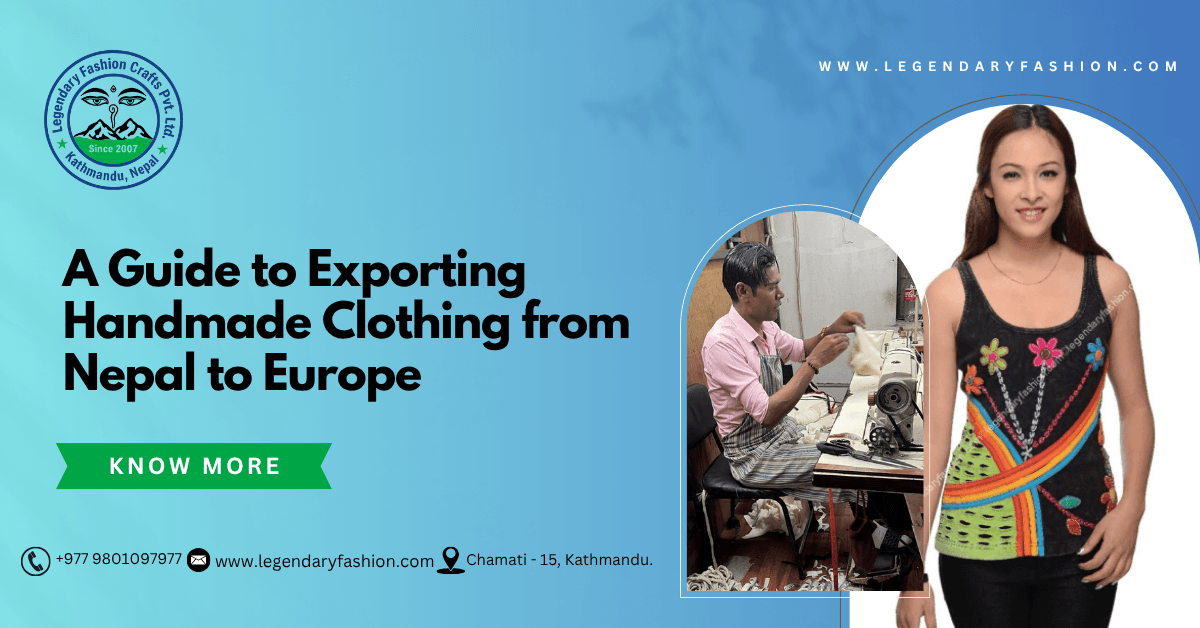
Nepal has a growing reputation for handmade clothing, traditional textiles, natural fabrics, and artisan-made fashion products. European buyers increasingly look for clothing that combines craftsmanship, distinctive designs, responsible production, and cultural value. For manufacturers and exporters in Nepal, this creates an opportunity to supply handmade clothing to European boutiques, fashion brands, wholesalers, retailers, and online businesses.
However, exporting handmade clothing from Nepal to Europe requires more than producing attractive products. Exporters need to understand product requirements, quality control, packaging, documentation, shipping, customs procedures, buyer expectations, and communication with European customers.
This guide explains the key steps involved in exporting handmade clothing from Nepal to Europe and provides practical information for businesses planning to enter the European market.
Why Export Handmade Clothing from Nepal to Europe?
Nepal has several advantages as a sourcing destination for handmade clothing. Local artisans have experience working with wool, cotton, hemp, natural fibers, handwoven fabrics, embroidery, tie-dye techniques, and other traditional production methods.
European buyers may be interested in Nepalese handmade clothing because of:
- Unique handmade designs
- Traditional Nepalese craftsmanship
- Small-batch production capabilities
- Natural and textured fabrics
- Artisan production
- Custom clothing options
- Cultural designs and patterns
- Growing interest in responsible fashion
- Opportunities for private-label manufacturing
For European businesses, working directly with a Nepalese clothing manufacturer can also provide access to products that are different from mass-produced fashion available from large manufacturing markets.
Step 1: Choose the Right Handmade Clothing Products
The first step in exporting clothing from Nepal is selecting products that have potential in the European market.
Popular categories may include:
- Handmade wool clothing
- Hand-knitted sweaters
- Handmade dresses
- Tie-dye clothing
- Embroidered clothing
- Cotton garments
- Hemp clothing
- Handmade jackets
- Bohemian-style clothing
- Handmade trousers
- Shawls and scarves
- Artisan accessories
Product selection should be based on more than personal preference. Research the target market, competitors, price ranges, seasonal demand, and buyer requirements.
If you are targeting boutiques, for example, unique designs and small production runs may be more important than extremely low prices. Wholesale buyers may instead focus on consistent quality, production capacity, packaging, and delivery schedules.
Step 2: Understand European Buyer Expectations
European clothing buyers generally expect clear product information and consistent quality. Before accepting an international order, exporters should understand exactly what the buyer requires.
Important factors include:
- Fabric composition
- Available sizes
- Product measurements
- Color options
- Washing instructions
- Label requirements
- Packaging specifications
- Minimum order quantity
- Delivery schedule
- Product quality standards
- Country of origin information
A professional product specification sheet can make communication easier. It should include product photographs, materials, dimensions, available colors, size information, wholesale prices, minimum order quantities, and production timelines.
Step 3: Check EU Clothing Regulations and Product Requirements
One of the most important parts of exporting handmade clothing to Europe is understanding applicable regulations.
Clothing sold in the European Union may need to comply with requirements related to textile labeling, product safety, chemical restrictions, consumer information, and other applicable rules.
Textile products generally need appropriate fiber composition labeling. Exporters should ensure that labels accurately describe the materials used in the garment.
European chemical regulations can also affect textile products. Certain substances may be restricted under EU rules, so exporters should understand the requirements relevant to dyes, finishes, accessories, and other materials used during manufacturing.
Requirements can vary depending on the product, destination country, buyer, and intended use. Exporters should verify current requirements before shipping commercial quantities.
Step 4: Maintain Consistent Product Quality
Quality control is essential when exporting handmade clothing.
Handmade production naturally creates some variation. However, buyers still expect garments to meet agreed specifications.
Before shipment, check:
- Stitching quality
- Fabric condition
- Measurements
- Color consistency
- Embroidery quality
- Buttons and accessories
- Seams and finishing
- Loose threads
- Stains or marks
- Label placement
- Packaging condition
For larger orders, establish a quality-control checklist and inspect products before packing.
Providing a pre-shipment inspection report or photographs can also help international buyers feel more confident about the order.
Step 5: Develop Professional Product Samples
European buyers often want to evaluate samples before placing large wholesale orders.
A sample allows the buyer to check:
- Fabric quality
- Design
- Color
- Fit
- Stitching
- Finishing
- Packaging
- Overall appearance
When sending samples, provide accurate product information and clearly identify each item.
If the buyer requests modifications, record those changes carefully before starting bulk production. Sample approval should ideally be documented so that both the exporter and buyer have a clear reference for the final order.
Step 6: Set Competitive Wholesale Prices
Pricing handmade clothing for export requires careful calculation.
Your export price may include:
Manufacturing Cost + Packaging + Quality Control + Documentation + Local Transportation + Export Costs + Shipping + Profit Margin
Depending on the agreed shipping terms, the buyer may pay international freight separately or the exporter may include transportation costs in the quoted price.
Avoid calculating your export price only from the production cost. International orders involve additional expenses that can significantly affect profitability.
It is also useful to provide different pricing levels for different order quantities. For example, larger wholesale orders may receive a better unit price than smaller sample or trial orders.
Step 7: Understand Minimum Order Quantities
Minimum order quantity, commonly called MOQ, is an important consideration for clothing exporters.
Some European buyers may want to test products with a small order before committing to larger quantities. Others may require hundreds or thousands of pieces.
If your business specializes in handmade clothing, flexible MOQs can be a competitive advantage.
However, the MOQ should reflect your production capacity. Very small orders may increase production costs, while very large orders may create quality-control and delivery challenges.
Clearly communicate your MOQ for:
- Individual products
- Colors
- Sizes
- Custom designs
- Private-label orders
Step 8: Prepare Export Documentation
Correct documentation helps reduce delays and problems during international shipping.
Depending on the shipment and trade arrangement, export documentation may include:
- Commercial invoice
- Packing list
- Certificate of origin
- Export declaration
- Transport documents
- Customs documentation
- Product-related certificates where applicable
The exact documents required can depend on the destination country, shipment type, product classification, and buyer requirements.
Exporters should work with experienced freight forwarders, customs professionals, or logistics providers when necessary.
Step 9: Understand HS Codes and Customs Classification
Every international product needs an appropriate customs classification. Harmonized System, or HS, codes are used to classify products for international trade.
Different types of clothing can have different HS classifications depending on factors such as material, garment type, construction, and intended use.
Using the correct HS code is important because it can affect customs declarations, duties, statistics, and import procedures.
Do not guess the HS code simply because another clothing company uses it. Confirm the appropriate classification for your specific product.
Step 10: Choose the Right Shipping Method
The best shipping method depends on order size, delivery deadline, product value, and buyer requirements.
Common options include:
Air Freight
Air freight is suitable for larger commercial shipments where faster delivery is important. It generally costs more than sea freight but can significantly reduce transit time.
Sea Freight
Sea freight is generally more suitable for larger shipments where cost efficiency is more important than speed. It can be useful for wholesale clothing orders.
Courier Services
International courier services can be useful for samples, small orders, documents, and urgent shipments.
When selecting a logistics provider, compare:
- Transit time
- Shipping cost
- Tracking availability
- Customs support
- Insurance options
- Destination coverage
- Delivery reliability
Step 11: Understand Incoterms
International commercial terms, commonly known as Incoterms, define responsibilities between buyers and sellers in international trade.
Terms such as EXW, FOB, CIF, and DDP can determine who is responsible for transportation, insurance, customs procedures, and certain costs.
For example, the responsibilities of an exporter selling under one Incoterm can be very different from those under another.
Before confirming an order, both parties should agree on the applicable Incoterm and clearly understand the associated responsibilities.
Step 12: Use Export-Friendly Packaging
Packaging is important for protecting handmade clothing during international transportation.
Clothing should be packed to protect it from:
- Moisture
- Dust
- Compression
- Damage during handling
- Contamination
- Excessive movement
Wholesale orders may require cartons with product labels, SKU information, size details, quantity information, and buyer-specific markings.
Good packaging also contributes to the customer’s overall perception of your brand.
Step 13: Build Trust With European Buyers
International buyers want reliable suppliers, not simply attractive products.
To build long-term relationships, focus on:
- Fast communication
- Accurate quotations
- Clear production timelines
- Consistent quality
- Transparent pricing
- Proper documentation
- Reliable shipping
- Honest product descriptions
- Professional after-sales communication
A professional website, product catalog, business email address, product photographs, and detailed company information can also help establish credibility.
For a Nepalese handmade clothing manufacturer, showing the craftsmanship and production process can help buyers understand the value behind the products.
Step 14: Start With Small Orders
If you are entering the European market for the first time, starting with smaller orders can reduce risk.
A practical approach is:
- Identify potential European buyers.
- Send a professional product catalog.
- Discuss requirements and pricing.
- Provide samples when requested.
- Confirm product specifications.
- Agree on payment and shipping terms.
- Produce the order.
- Complete quality inspection.
- Prepare export documentation.
- Ship the goods.
- Request buyer feedback.
- Improve future production based on feedback.
This process can help establish a reliable export system before taking larger orders.
Common Challenges When Exporting Handmade Clothing From Nepal
Exporting handmade clothing can provide significant opportunities, but exporters may face several challenges.
Production Consistency
Handmade products can have minor variations. Establishing clear production standards helps maintain consistency.
International Shipping Costs
Nepal is a landlocked country, so international logistics can involve additional transportation stages. Shipping costs should therefore be calculated carefully before providing a final quotation.
Regulatory Compliance
European markets have specific product and labeling requirements. Exporters need to verify applicable rules for their products before shipping.
Delivery Times
International transportation and customs procedures can affect delivery schedules. Always provide realistic production and shipping timelines.
Buyer Communication
Language differences, time zones, and different business practices can sometimes create misunderstandings. Written specifications and clear order confirmations can reduce these problems.
How Legendary Fashion Crafts Can Support European Buyers
Legendary Fashion Crafts focuses on handmade clothing and Nepalese textile products for international buyers. For European wholesalers, boutiques, retailers, and fashion businesses, working with a manufacturer that understands handmade production can make product sourcing easier.
From product development and production to quality checking and export preparation, an experienced manufacturing partner can help buyers source products according to their requirements.
Businesses interested in sourcing handmade clothing from Nepal can discuss product categories, wholesale requirements, custom designs, order quantities, and export requirements before placing an order.
Final Thoughts
Exporting handmade clothing from Nepal to Europe requires careful planning, consistent quality, accurate documentation, reliable logistics, and a clear understanding of European buyer expectations.
Nepal’s handmade textile sector offers opportunities for businesses looking for distinctive products with traditional craftsmanship and small-batch production capabilities. By selecting suitable products, maintaining quality standards, understanding European requirements, using appropriate packaging, and working with reliable logistics partners, Nepalese clothing manufacturers can build long-term relationships with European buyers.
For exporters, the goal should not simply be to complete one international shipment. Building a reliable export system and becoming a trusted supplier can create repeat orders and long-term business opportunities in the European fashion market.
Frequently Asked Questions
1. Can handmade clothing from Nepal be exported to Europe?
Yes. Handmade clothing manufactured in Nepal can be exported to European countries when the products meet applicable import, labeling, customs, textile, and safety requirements.
2. What handmade clothing products can Nepal export to Europe?
Nepalese exporters can supply products such as handmade wool clothing, cotton garments, embroidered clothing, tie-dye garments, hemp clothing, handmade dresses, trousers, jackets, shawls, and other textile products.
3. Do handmade clothes need labels when sold in Europe?
Yes. Textile products sold in the European Union generally need appropriate fiber composition labeling. Other labeling requirements may also apply depending on the product and market.
4. What documents are required to export clothing from Nepal to Europe?
Depending on the shipment, documents may include a commercial invoice, packing list, certificate of origin, customs documentation, transport documents, export declarations, and product-specific documentation where applicable.
5. How much does it cost to export handmade clothing from Nepal to Europe?
The cost depends on product quantity, package weight and volume, shipping method, destination, customs-related costs, packaging, documentation, and the agreed trade terms.
6. What is the best shipping method for handmade clothing from Nepal to Europe?
Air freight can be suitable for time-sensitive commercial orders, sea freight can be more economical for larger shipments, and courier services can be useful for samples and smaller packages.
7. What is MOQ in handmade clothing export?
MOQ means Minimum Order Quantity. It is the smallest quantity a manufacturer agrees to produce or sell for an order. The MOQ can vary depending on the product, design, fabric, customization, and production requirements.
8. Can European fashion brands order custom handmade clothing from Nepal?
Yes. Nepalese manufacturers may produce customized clothing based on designs, fabrics, colors, measurements, labels, packaging, and other specifications agreed with the buyer.
9. How can European buyers find handmade clothing manufacturers in Nepal?
European buyers can search for Nepalese manufacturers through business websites, trade networks, exhibitions, sourcing platforms, referrals, and direct contact with established clothing manufacturers and exporters.
10. How can I start importing handmade clothing from Nepal to Europe?
Start by identifying suitable products and a reliable Nepalese manufacturer. Request product information and samples, confirm quality and specifications, agree on pricing and order quantities, establish payment and shipping terms, verify applicable European requirements, and prepare the required export and import documentation before shipment.