
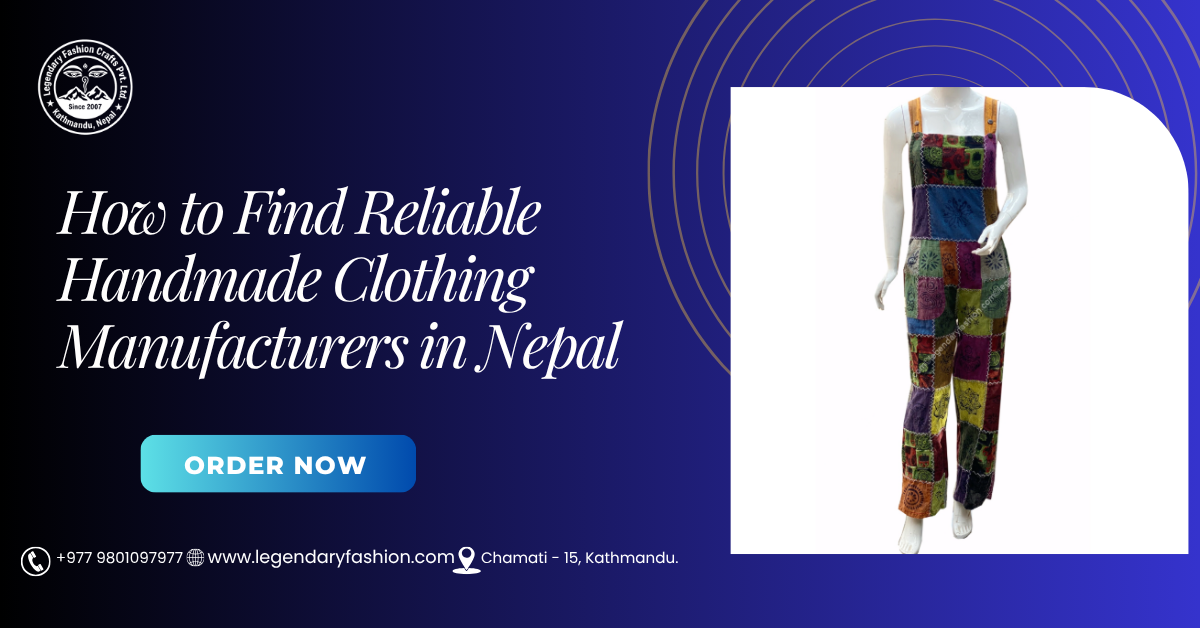
Nepal has a strong tradition of handmade textiles, traditional craftsmanship, and small-scale garment production. From woolen products and handmade clothing to naturally dyed fabrics and artisan-crafted garments, Nepal offers valuable opportunities for international brands, wholesalers, boutiques, and retailers looking for distinctive products.
However, finding a reliable handmade clothing manufacturer in Nepal requires more than searching for a supplier and comparing prices. You need to evaluate craftsmanship, production capacity, material quality, communication, customization options, packaging, and export readiness.
This guide explains how to identify and choose a dependable handmade clothing manufacturer in Nepal.
1. Understand What You Need Before Contacting Manufacturers
Start by clearly defining your requirements. A good manufacturer can provide better information when you know exactly what you want to produce.
Consider the following:
- Type of clothing or textile product
- Fabric and raw materials
- Product sizes and measurements
- Colors and dyeing requirements
- Embroidery or other decorative work
- Quantity required
- Custom labeling and packaging
- Target market
- Expected delivery schedule
- Shipping destination
For example, if you are looking for Nepalese handmade woolen clothing for export, specify whether you need sweaters, jackets, scarves, ponchos, trousers, or other products.
Having clear specifications also makes it easier to compare different manufacturers.
2. Look for Experience in Handmade Garment Production
Experience is one of the most important factors when choosing a handmade clothing manufacturer.
Handmade garments require different skills from mass-produced factory clothing. Experienced manufacturers understand fabric handling, stitching, dyeing, finishing, sizing, and quality control.
Ask potential suppliers:
- How long have you been manufacturing handmade clothing?
- What products do you specialize in?
- Do you manufacture in-house?
- Can you provide product samples?
- Have you supplied international customers before?
- Which markets do you regularly serve?
A manufacturer with established experience in handmade clothing is more likely to understand the quality expectations of wholesale and international buyers.
3. Check Product Quality Carefully
Product quality should be evaluated before placing a large order.
Request samples and examine important details such as:
- Stitching quality
- Fabric consistency
- Color accuracy
- Finishing
- Seam strength
- Size accuracy
- Embroidery quality
- Washing and care requirements
- Overall appearance
For handmade clothing, small variations can occur because products involve skilled craftsmanship. However, these variations should not compromise durability, appearance, or usability.
If you plan to sell the products under your own brand, establish clear quality standards before production begins.
4. Ask About Manufacturing Capacity
A manufacturer may produce excellent handmade clothing but still be unsuitable for your business if they cannot handle your required order volume.
Ask about:
- Minimum order quantity
- Monthly production capacity
- Number of workers or artisans
- Production lead time
- Seasonal production limitations
- Ability to handle repeat orders
This is particularly important for wholesalers and retailers who need consistent supply.
A reliable handmade clothing manufacturer in Nepal should be able to explain its production process and provide realistic delivery timelines instead of promising quantities that cannot be produced consistently.
5. Evaluate Customization Options
Many international buyers want products that match their brand identity rather than standard designs.
Ask whether the manufacturer can provide:
- Custom colors
- Custom sizes
- Private labeling
- Custom embroidery
- Custom patterns
- Brand tags
- Custom packaging
- Product modifications
Discuss customization requirements before confirming an order. Some manufacturers specialize in ready-made products, while others have greater flexibility for custom manufacturing.
6. Verify Materials and Sourcing
The quality of handmade clothing depends heavily on the materials used.
Ask where the manufacturer sources fabrics, wool, yarn, dyes, buttons, labels, and other components.
For example, if you are purchasing handmade wool products, ask about:
- Type of wool
- Yarn quality
- Fabric composition
- Dyeing process
- Material durability
- Care instructions
If your customers value natural or traditional materials, request accurate information that can be used in your product descriptions and marketing materials.
7. Compare Prices, But Do Not Choose Only on Price
Price is important, but the cheapest manufacturer may not be the best option.
A lower quotation can sometimes reflect differences in:
- Material quality
- Labor
- Product finishing
- Packaging
- Quality control
- Production standards
- Shipping preparation
Instead of comparing only the unit price, calculate the overall value.
A dependable manufacturer should provide a transparent quotation covering product costs, customization, packaging, and other applicable charges.
8. Review Communication and Responsiveness
Good communication is essential for successful manufacturing relationships, particularly when working with an overseas supplier.
Pay attention to how quickly and clearly a manufacturer answers your questions.
A reliable supplier should be able to communicate information about:
- Product specifications
- Pricing
- Samples
- Production timelines
- Quality standards
- Packaging
- Shipping
- Payment terms
If communication is unclear before you place an order, managing production later may become more difficult.
9. Request Samples Before a Bulk Order
Never rely entirely on product photographs when purchasing handmade clothing in bulk.
A sample allows you to evaluate the actual product before committing to a large order.
When reviewing a sample, compare it against your requirements for:
- Material
- Color
- Size
- Design
- Stitching
- Finishing
- Packaging
If modifications are required, communicate them clearly and obtain approval before bulk production starts.
For repeat orders, keeping an approved sample or detailed product specification sheet can help maintain consistency.
10. Choose a Manufacturer That Understands Export Requirements
If you are purchasing handmade clothing for international distribution, the manufacturer should understand the requirements associated with export orders.
Discuss:
- Export packaging
- Commercial documentation
- Product labeling
- Carton specifications
- Shipping arrangements
- Delivery timelines
- Destination requirements
Not every local clothing producer has experience with international wholesale orders. Choosing a manufacturer familiar with export processes can make the purchasing process easier.
Why Choose a Nepalese Handmade Clothing Manufacturer?
Nepal offers a distinctive combination of traditional craftsmanship, textile skills, and handmade production. For brands looking for products with an artisan character, Nepal can be an attractive sourcing destination.
Handmade Nepalese clothing can be suitable for:
- Fashion boutiques
- Ethical fashion brands
- Wholesale clothing businesses
- Outdoor and lifestyle retailers
- Gift shops
- International distributors
- Private-label fashion brands
Working directly with an experienced manufacturer can also give buyers greater control over product specifications, quantities, and customization.
Why Legendary Fashion Crafts Can Be a Manufacturing Partner
Legendary Fashion Crafts focuses on handmade clothing and Nepalese textile products for customers looking for quality craftsmanship and distinctive products.
For businesses interested in sourcing handmade clothing from Nepal, the company can be considered for wholesale and export-oriented requirements. Buyers can discuss product specifications, quantities, customization requirements, and other manufacturing needs directly with the team.
Legendary Fashion Crafts
📍 Chamati-15, Kathmandu, Nepal
🌐 www.legendaryfashion.com
📞 +977-9801097977
Conclusion
Finding reliable handmade clothing manufacturers in Nepal requires careful evaluation of quality, production capacity, materials, customization, pricing, communication, and export experience.
Do not make your decision based only on photographs or the lowest quotation. Request samples, clarify specifications, understand production timelines, and establish quality expectations before placing a bulk order.
For international brands, wholesalers, and retailers, choosing the right manufacturing partner can create a long-term sourcing relationship and provide access to distinctive Nepalese handmade clothing.
Frequently Asked Questions
1. How can I find handmade clothing manufacturers in Nepal?
You can find manufacturers through online research, trade networks, business directories, referrals, and direct contact with established Nepalese clothing companies. Always verify their production capabilities and request samples before placing a bulk order.
2. What should I ask a handmade clothing manufacturer in Nepal?
Ask about product specifications, minimum order quantities, production capacity, materials, pricing, customization, lead times, quality control, packaging, and export experience.
3. Can Nepalese manufacturers produce custom clothing?
Yes. Some manufacturers offer custom colors, designs, sizes, embroidery, labels, and packaging. Confirm customization capabilities before placing an order.
4. Can I order handmade clothing from Nepal in bulk?
Yes. Many manufacturers work with wholesalers, retailers, boutiques, and international buyers. Minimum order quantities vary by manufacturer and product.
5. Should I request a sample before placing a bulk order?
Yes. A sample helps you evaluate material quality, stitching, sizing, colors, finishing, and overall craftsmanship before committing to a larger order.
6. Are handmade clothes from Nepal suitable for international markets?
Yes. Nepalese handmade clothing can be suitable for international boutiques, fashion brands, wholesalers, and retailers, provided the products meet the buyer’s quality, labeling, packaging, and market requirements.
7. How long does handmade clothing production take in Nepal?
Production time depends on the product, quantity, customization, materials, and season. Always confirm the expected production schedule with the manufacturer before ordering.
8. Can Nepalese clothing manufacturers provide private labeling?
Some manufacturers can provide private labeling, including brand tags and customized packaging. Buyers should discuss labeling requirements before production begins.
9. How do I check the quality of handmade clothing?
Request samples and inspect the fabric, stitching, seams, sizing, color, embroidery, finishing, and durability. For larger orders, establish clear quality standards before production.
10. Why should I source handmade clothing from Nepal?
Nepal has a long tradition of textile craftsmanship and handmade production. Sourcing from Nepal can provide access to distinctive clothing, artisan techniques, and products that can offer a unique character to fashion and lifestyle brands.