
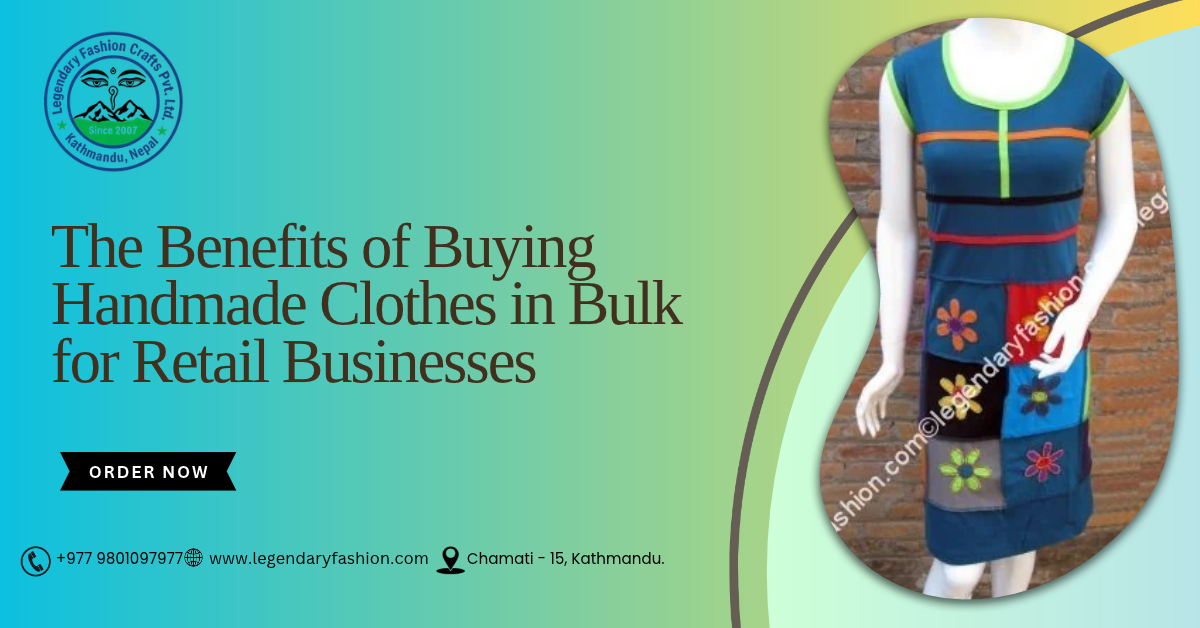
For retail businesses, choosing the right clothing products can have a major impact on profitability, customer satisfaction, and long-term growth. While mass-produced garments remain common in the fashion industry, handmade clothing offers retailers an opportunity to build a distinctive product range with unique designs, skilled craftsmanship, and strong cultural value.
Buying handmade clothes in bulk can be particularly beneficial for boutiques, fashion stores, online retailers, wholesalers, ethical fashion brands, and international clothing businesses. Bulk purchasing allows retailers to secure products at competitive prices while maintaining a consistent supply of distinctive garments.
Nepal is well known for its traditional craftsmanship, textile skills, and handmade products. Businesses looking for handmade clothing suppliers in Nepal can access a wide range of garments suitable for different retail markets.
In this guide, we explore the major benefits of buying handmade clothes in bulk and explain why wholesale handmade clothing can be a valuable sourcing option for retail businesses.
What Is Handmade Clothing in Bulk?
Handmade clothing in bulk refers to purchasing multiple pieces of handcrafted garments directly from a manufacturer, supplier, or wholesale clothing business. Depending on the supplier, retailers may be able to order existing designs in larger quantities or request customized products based on their requirements.
Wholesale handmade clothing can include products such as:
- Handmade cotton dresses
- Tie-dye clothing
- Embroidered garments
- Hand-crocheted clothing
- Bohemian-style dresses
- Handmade trousers
- Nepalese ethnic clothing
- Handcrafted tops and tunics
- Wool and natural-fiber garments
- Handmade fashion accessories
For retailers, bulk purchasing can make it easier to maintain inventory while offering customers products that are different from standard factory-produced garments.
1. Better Wholesale Pricing
One of the most important advantages of buying handmade clothes in bulk is the potential for better wholesale pricing.
Suppliers often provide more competitive rates when retailers purchase larger quantities. The cost per garment can decrease as the order volume increases, helping businesses improve their profit margins.
For example, a retailer purchasing 10 pieces of a design may pay a higher unit price than a retailer ordering 100 or 500 pieces. The exact pricing depends on the garment, fabric, craftsmanship, customization, and order quantity.
Lower purchasing costs can give retailers more flexibility when setting their selling prices.
2. Higher Profit Potential for Retailers
Bulk purchasing can help retailers create a healthier difference between wholesale costs and retail prices.
Handmade garments often have distinctive designs and craftsmanship that can support premium pricing when presented effectively. Customers may be willing to pay more for clothing that offers originality, craftsmanship, cultural inspiration, or limited availability.
By sourcing products at wholesale prices, retailers can potentially achieve attractive margins while offering customers products with a strong perceived value.
However, retailers should calculate all costs before setting prices, including shipping, customs duties, packaging, storage, marketing, and other operational expenses.
3. Unique Products That Stand Out
One of the strongest reasons to source handmade clothing is product uniqueness.
Mass-produced clothing can be widely available through many retailers. Handmade garments, on the other hand, often feature distinctive patterns, colors, embroidery, textures, and finishing details.
This uniqueness can help a retail business create a more recognizable product range.
For boutiques and independent fashion stores, having distinctive products can be especially important because customers often look for items they cannot easily find in larger chain stores.
4. Strong Appeal for Ethical and Sustainable Fashion Buyers
Consumer interest in responsible fashion has encouraged many retailers to explore products made with greater attention to craftsmanship, materials, and production practices.
Handmade clothing can fit well within an ethical or sustainable fashion strategy, depending on how the products are manufactured and what materials are used.
Retailers can highlight relevant product attributes such as handmade production, natural fabrics, traditional craftsmanship, small-batch production, or responsible sourcing when these claims accurately reflect the manufacturing process.
This can help brands connect with customers who value more considered purchasing decisions.
5. Access to Traditional Craftsmanship
Handmade clothing from Nepal can provide retailers with access to traditional textile skills and distinctive design influences.
Nepal has a long history of textile and handicraft production. Local artisans and manufacturers work with techniques such as embroidery, crochet, weaving, dyeing, and other forms of textile craftsmanship.
For international retailers, sourcing from Nepal can introduce new design influences to their collections while supporting skilled producers and craft-based businesses.
A strong product story can also make handmade garments more appealing to customers.
6. Flexible Product Customization
Many wholesale handmade clothing manufacturers can offer some degree of customization, depending on their production capabilities.
Retailers may be able to discuss options such as:
- Fabric selection
- Colors
- Patterns
- Sizes
- Embroidery
- Product dimensions
- Labels
- Packaging
- Design modifications
Customization can help retailers develop exclusive collections instead of selling exactly the same products as competing businesses.
Before placing a large order, retailers should discuss minimum order quantities, production timelines, sample approval, customization costs, and quality requirements with the supplier.
7. Opportunity to Build an Exclusive Collection
Bulk sourcing does not necessarily mean buying generic products.
Retail businesses can work with a manufacturer to develop collections that match their brand identity. For example, a boutique could request a specific color palette, fabric combination, embroidery style, or garment design.
An exclusive collection can help create stronger brand recognition.
Retailers can also organize handmade clothing into seasonal collections, limited editions, festival collections, resort wear, casual wear, or culturally inspired fashion ranges.
8. Reliable Inventory for Growing Retail Businesses
Maintaining adequate inventory is essential for retail businesses.
Running out of popular products can result in missed sales and disappointed customers. Buying handmade clothes in bulk can provide retailers with a larger inventory buffer, especially for products that sell consistently.
Bulk ordering can also simplify purchasing because retailers do not need to place frequent small orders for the same products.
However, businesses should avoid overstocking. Handmade clothing should be ordered according to expected demand, available storage, seasonal trends, and sales history.
9. Better Consistency Across Wholesale Orders
Working with the same handmade clothing manufacturer over multiple orders can help retailers develop a consistent supply relationship.
Once a supplier understands the retailer’s preferred fabrics, sizes, colors, finishing standards, and packaging requirements, future orders may become easier to manage.
Retailers should establish clear quality specifications before the first large order. Product samples, measurements, fabric details, color references, and packaging instructions can help reduce misunderstandings.
A reliable supplier relationship can become an important part of a retailer’s long-term sourcing strategy.
10. Stronger Product Storytelling
Handmade clothing offers retailers more opportunities to tell a story around their products.
Instead of simply describing a garment as a dress, retailer product descriptions can explain the fabric, craftsmanship, design inspiration, production method, and cultural influences where appropriate.
Storytelling can be particularly effective for boutique stores and online fashion brands.
For example, a product page might explain that a garment was produced using traditional textile techniques or handcrafted finishing. Such information can give customers additional reasons to appreciate the product.
Retailers should ensure that all claims about materials, artisans, production methods, and sustainability are accurate and verifiable.
11. Suitable for Boutiques and Online Fashion Stores
Wholesale handmade clothing can work across different retail models.
Boutique Stores
Physical boutiques can use handmade garments to create a distinctive in-store collection. Unique colors, textures, and designs can help create an appealing shopping experience.
Online Fashion Stores
E-commerce businesses can use handmade clothing to build specialized collections around particular styles, such as bohemian fashion, ethnic clothing, natural fabrics, or Nepalese-inspired designs.
Wholesale Resellers
Clothing wholesalers can purchase products in larger quantities and distribute them to smaller retailers.
Fashion Brands
Established brands can work with manufacturers to develop private-label or customized collections, depending on supplier capabilities.
12. International Sourcing Opportunities
Retailers outside Nepal can explore international sourcing partnerships with Nepalese handmade clothing manufacturers.
Before placing an international bulk order, buyers should consider several factors, including:
- Minimum order quantity
- Product specifications
- Sample approval
- Production lead time
- Packaging requirements
- Shipping method
- Export documentation
- Import regulations
- Customs duties
- Payment terms
- Quality inspection
Clear communication is essential when purchasing handmade clothes internationally.
13. How to Choose a Handmade Clothing Manufacturer
Choosing the right supplier is one of the most important parts of bulk purchasing.
Retailers should evaluate manufacturers based on product quality, production capacity, communication, pricing, customization options, delivery timelines, and previous export experience.
Before confirming a large order, consider requesting samples.
A sample allows the buyer to evaluate:
- Fabric quality
- Stitching
- Color accuracy
- Measurements
- Embroidery
- Finishing
- Overall appearance
- Packaging quality
It is also useful to confirm whether the manufacturer can reproduce the approved sample consistently for larger quantities.
14. Tips for Buying Handmade Clothes in Bulk
Retailers can reduce sourcing problems by following a structured purchasing process.
Define Your Target Market
Understand your customers before selecting products. Consider their preferred styles, price range, sizes, colors, and shopping habits.
Start With Samples
Always inspect samples before committing to a significant bulk order whenever possible.
Confirm Minimum Order Quantities
Ask the supplier about the minimum quantity required for each design, color, and size.
Discuss Lead Times
Handmade products may require more production time than standardized factory garments. Confirm realistic production schedules before ordering.
Agree on Quality Standards
Document measurements, fabrics, colors, stitching, embroidery, labels, and other important requirements.
Calculate the Complete Cost
Do not evaluate the purchase price alone. Include freight, customs, taxes, packaging, storage, and other expenses when calculating your landed cost.
Build a Long-Term Supplier Relationship
Consistent communication and repeat orders can help both retailers and manufacturers understand each other’s expectations.
Why Legendary Fashion Crafts Can Be a Valuable Sourcing Partner
For retailers searching for handmade clothing from Nepal, Legendary Fashion Crafts offers an opportunity to source Nepalese handmade garments for wholesale and international markets.
A strong wholesale partnership should focus on product quality, clear communication, reliable production, and the specific requirements of each buyer.
Retailers interested in bulk handmade clothing can discuss product selections, order quantities, customization requirements, and export needs with the supplier before placing an order.
For businesses looking to expand their handmade clothing range, sourcing directly from Nepal can provide access to distinctive garments while creating opportunities to develop a unique retail collection.
Conclusion
Buying handmade clothes in bulk can provide retail businesses with several advantages, from competitive wholesale pricing and stronger profit potential to unique products and opportunities for customization.
Handmade garments can help boutiques, online stores, wholesalers, and fashion brands differentiate their collections in a competitive market. Nepal’s strong tradition of textile craftsmanship also makes it an attractive sourcing destination for retailers looking for distinctive handmade clothing.
The key to successful bulk purchasing is choosing the right supplier, inspecting product quality, clearly communicating requirements, calculating the complete landed cost, and planning inventory according to customer demand.
For retailers seeking unique wholesale handmade clothing from Nepal, a reliable manufacturing partnership can become an important part of long-term business growth.
Frequently Asked Questions
1. What are the main benefits of buying handmade clothes in bulk?
The main benefits include better wholesale pricing, potentially higher profit margins, unique product designs, customization opportunities, consistent inventory, and access to traditional craftsmanship.
2. Is handmade clothing suitable for retail businesses?
Yes. Handmade clothing can be suitable for boutiques, online stores, fashion brands, wholesalers, gift shops, and other retailers looking for distinctive products.
3. Can I customize handmade clothing for my retail brand?
Many manufacturers offer customization options such as colors, fabrics, sizes, embroidery, labels, and design modifications. Availability depends on the manufacturer and order quantity.
4. Is there a minimum order quantity for wholesale handmade clothing?
Most manufacturers have minimum order quantities, but the amount varies by product, design, customization requirements, and production capacity.
5. Why should retailers source handmade clothing from Nepal?
Nepal offers traditional textile craftsmanship, distinctive designs, skilled producers, and a variety of handmade garments that can be suitable for international retail markets.
6. Should I request samples before placing a bulk order?
Yes. Samples allow buyers to evaluate fabric, stitching, measurements, colors, finishing, and overall product quality before committing to a large order.
7. Can handmade clothes be exported internationally?
Yes. Handmade clothing can be exported internationally when the products and shipments meet the applicable export, import, customs, labeling, and documentation requirements.
8. How can retailers calculate the actual cost of bulk handmade clothing?
Retailers should consider the product price, packaging, shipping, insurance where applicable, customs duties, taxes, storage, and other related expenses to calculate the total landed cost.
9. Can handmade clothing help a retail brand stand out?
Yes. Unique designs, handcrafted details, distinctive fabrics, and product stories can help a retailer create a more differentiated product range.
10. How can I buy handmade clothes in bulk from Nepal?
Retailers can contact a Nepalese handmade clothing manufacturer or exporter, discuss product requirements and quantities, request samples, confirm pricing and production timelines, and then finalize the order and shipping arrangements.