
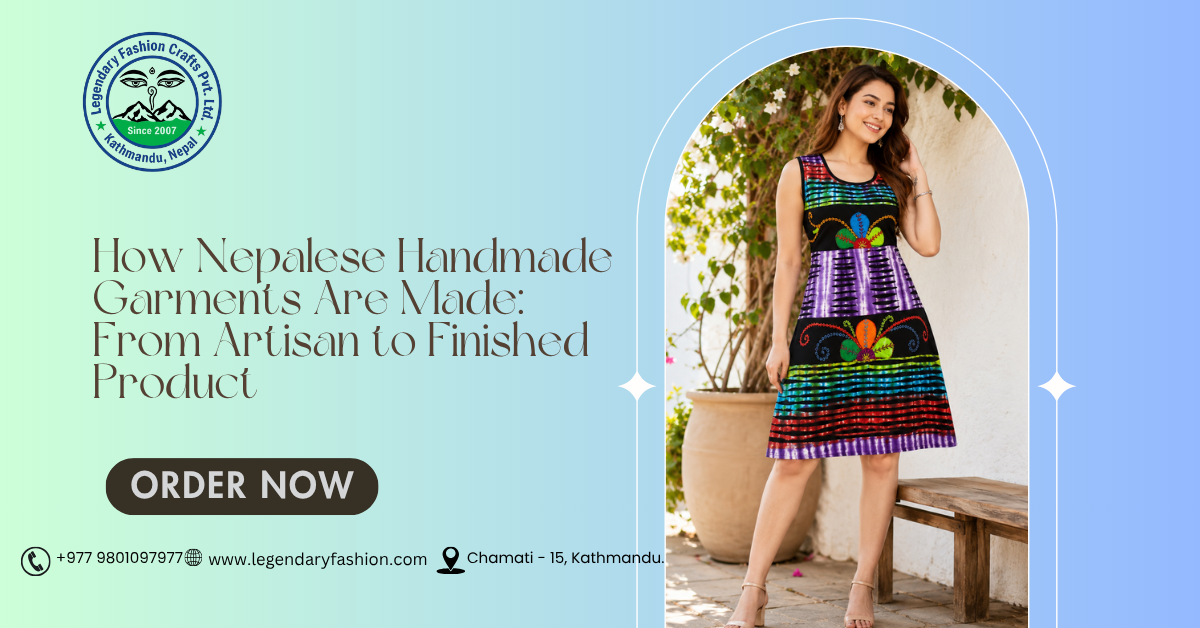
Nepalese handmade garments are valued for their distinctive designs, skilled craftsmanship, natural materials, and connection to traditional textile practices. From hand-selecting fabrics to stitching, dyeing, finishing, and quality inspection, each stage requires attention to detail and experienced artisans.
For international buyers, retailers, wholesalers, and fashion brands looking for distinctive apparel, understanding how handmade garments are produced in Nepal provides valuable insight into their quality and craftsmanship.
Legendary Fashion Crafts, a garment manufacturer and exporter in Kathmandu, Nepal, works with skilled artisans and experienced production teams to create handmade clothing for different markets. Here is a closer look at how a Nepalese handmade garment moves from an initial concept to a finished product.
1. Designing the Garment
The production process begins with garment design. Designers consider the intended style, fabric, colors, measurements, functionality, and target market before production starts.
Popular handmade clothing produced in Nepal includes:
- Handmade ladies clothing
- Bohemian dresses
- Aladdin trousers
- Dungarees
- Wrap-around skirts
- Harem pants
- Cotton tops
- Jackets and hooded garments
- Stonewashed and tie-dye clothing
- Natural and non-washed garments
- Woolen products
Designs may incorporate traditional influences while adapting them to contemporary fashion preferences. For wholesale buyers, designs are often developed according to specific measurements, colors, fabric requirements, and order quantities.
2. Selecting the Right Fabric
Fabric selection is an important part of handmade garment production. The choice of material affects the appearance, comfort, durability, weight, and final price of the garment.
Common materials used in Nepalese clothing production include:
- Cotton
- Hemp
- Wool
- Linen
- Rayon
- Recycled and blended fabrics
- Natural textile materials
The fabric is inspected for texture, color consistency, thickness, and visible defects before it enters the production process.
For handmade clothing, fabric quality is particularly important because the finished product should maintain a consistent appearance while retaining the character of the material.
3. Creating Patterns and Cutting the Fabric
Once the design and fabric have been approved, patterns are prepared according to the required measurements.
Patterns serve as templates for cutting different sections of a garment, including sleeves, front and back panels, collars, pockets, waistbands, and other components.
The fabric is carefully laid out before cutting. Experienced workers measure the material and position patterns to minimize fabric waste. Precision at this stage helps ensure that garments maintain consistent sizing throughout a wholesale production order.
For custom clothing orders, pattern specifications may be adjusted according to the buyer’s requirements.
4. Handcrafting and Sewing
Sewing is one of the most important stages in the production of handmade garments in Nepal.
Depending on the design, garments may involve a combination of handwork and sewing equipment. Skilled workers assemble individual fabric pieces while paying attention to seams, stitching, hems, pockets, fastenings, and other details.
Certain garments may also include decorative handwork, embroidery, patchwork, or other traditional techniques.
The skill of the artisan plays an important role at this stage. Small details such as seam alignment, stitch quality, garment shape, and finishing can significantly influence the appearance of the final product.
5. Dyeing and Special Fabric Treatments
Color and texture are important characteristics of many Nepalese handmade garments. Depending on the product, fabric may undergo dyeing, washing, stonewashing, tie-dyeing, or other treatments.
Tie-Dye
Tie-dye techniques create distinctive patterns by folding, tying, and dyeing sections of fabric. Because the process involves manual techniques, individual pieces can have subtle variations.
Stonewashing
Stonewashing can create a softer texture and worn appearance. It is commonly used for casual and bohemian-style clothing.
Natural and Non-Washed Finishes
Some collections retain a more natural appearance by minimizing washing and surface treatments. This allows the original characteristics of the fabric to remain visible.
The treatment selected depends on the garment design, fabric type, buyer specifications, and desired finish.
6. Hand Embroidery and Decorative Details
Decorative craftsmanship can give Nepalese handmade clothing its distinctive character. Depending on the design, artisans may add embroidery, fabric panels, decorative stitching, or other handcrafted elements.
Hand embroidery requires patience and consistency. Artisans work carefully to maintain the intended pattern and placement.
These details can be especially valuable for boutique fashion brands and retailers seeking garments that have a handcrafted appearance rather than a completely standardized factory-made look.
7. Garment Assembly and Finishing
After the major components have been sewn and decorated, the garment moves to the finishing stage.
Workers check details such as:
- Loose threads
- Uneven seams
- Incorrect stitching
- Hem alignment
- Buttons and fasteners
- Pockets
- Labels
- Overall garment shape
Excess threads are removed, seams are cleaned, and necessary adjustments are made.
The garment may then be pressed or steamed to improve its appearance before quality inspection.
8. Quality Control
Quality control is essential for wholesale garment manufacturing because buyers expect consistency across their orders.
A quality inspection may examine fabric condition, measurements, stitching, color, finishing, accessories, and overall construction.
For export orders, additional requirements may apply depending on the destination market and buyer specifications.
A systematic inspection process helps identify production problems before garments are packed and shipped.
9. Labelling, Folding, and Packaging
Once garments pass quality inspection, they are prepared for delivery.
Labels may include information such as:
- Brand name
- Size
- Fabric composition
- Care instructions
- Country of origin
- Product information
Garments are then folded, packed, and prepared according to the buyer’s packaging requirements.
For wholesale and export orders, packaging specifications can vary depending on the retailer, distributor, or destination market.
10. From Kathmandu Workshop to International Market
The final stage is getting finished garments from the manufacturing facility to buyers.
Nepalese garment manufacturers and exporters can supply clothing to retailers, wholesalers, fashion brands, boutiques, and international distributors.
Kathmandu has developed a reputation for handmade and ethical fashion products, particularly garments influenced by bohemian, natural, and traditional textile styles.
For international buyers, working directly with an experienced garment manufacturer can simplify communication about product specifications, samples, production quantities, packaging, and shipping.
Why Nepalese Handmade Garments Stand Out
Nepalese handmade garments combine craftsmanship with distinctive textile traditions. Their appeal comes from several characteristics:
Skilled Artisan Craftsmanship
Experienced artisans contribute manual skills to cutting, sewing, embroidery, dyeing, and finishing.
Distinctive Designs
Nepalese clothing often combines traditional influences with contemporary bohemian and casual fashion styles.
Natural Textile Options
Cotton, hemp, wool, and other textile materials can be used to create comfortable and distinctive garments.
Small-Batch Production
Handmade production can be suitable for brands interested in smaller collections, boutique products, and distinctive designs.
Custom Manufacturing
Manufacturers can work with buyers on specifications such as fabric, colors, measurements, designs, labels, and packaging.
Why Choose a Nepalese Garment Manufacturer?
For fashion brands and wholesale buyers, Nepal can provide access to experienced garment producers and artisan craftsmanship. A reliable manufacturer should be able to demonstrate product quality, production capabilities, sampling processes, quality control procedures, and export experience.
Legendary Fashion Crafts Pvt. Ltd. in Kathmandu provides handmade garment manufacturing and export solutions for international buyers. Its product range includes ladies clothing, trousers, dresses, skirts, jackets, tops, children’s clothing, and other handmade apparel.
Conclusion
The journey of a Nepalese handmade garment involves much more than stitching fabric together. It begins with design and fabric selection and continues through pattern making, cutting, sewing, dyeing, decorative work, finishing, quality inspection, and packaging.
Every stage contributes to the character and quality of the finished product. Skilled artisans, careful production practices, and attention to detail help create garments that combine practical wearability with distinctive handmade appeal.
For fashion brands, wholesalers, retailers, and international buyers looking for handmade garments from Nepal, understanding this production process can make it easier to evaluate manufacturers and develop products that meet their quality and design requirements.
Frequently Asked Questions
1. What are Nepalese handmade garments?
Nepalese handmade garments are clothing products made using artisan skills and traditional or semi-traditional textile techniques. They may include handmade sewing, embroidery, dyeing, stonewashing, tie-dyeing, and decorative work.
2. What fabrics are commonly used for handmade garments in Nepal?
Cotton, hemp, wool, linen, rayon, and various blended or recycled fabrics may be used depending on the garment design and buyer requirements.
3. Are Nepalese handmade garments suitable for wholesale orders?
Yes. Nepalese garment manufacturers can produce clothing for wholesalers, retailers, boutiques, fashion brands, and international distributors. Production quantities depend on the manufacturer, product, and order specifications.
4. Can I order custom handmade garments from Nepal?
Many manufacturers accept custom production requirements. Buyers may be able to specify designs, measurements, fabrics, colors, labels, finishes, and packaging depending on the manufacturer’s capabilities.
5. How long does it take to manufacture handmade garments in Nepal?
Production time varies according to the garment design, order quantity, fabric availability, finishing requirements, and customization. Buyers should confirm the production schedule with the manufacturer before placing an order.
6 What makes handmade garments different from mass-produced clothing?
Handmade garments often involve greater artisan participation and manual finishing. This can create subtle variations in texture, color, stitching, or appearance that contribute to the character of handmade clothing.
7. Are Nepalese garments available for export?
Yes. Nepalese garment manufacturers and exporters supply clothing to international markets. Export arrangements depend on the manufacturer, buyer requirements, destination country, shipping method, and applicable customs procedures.
8. Can Nepalese manufacturers produce private-label clothing?
Some garment manufacturers offer private-label production, allowing buyers to use their own brand labels and product specifications. Buyers should discuss labelling, packaging, minimum order quantities, and customization before production.
9. What types of handmade clothing are produced in Nepal?
Popular categories include handmade dresses, trousers, skirts, tops, jackets, dungarees, harem pants, wrap-around skirts, children’s clothing, woolen products, and various bohemian-style garments.
10. How can I find a handmade garment manufacturer in Nepal?
International buyers can research manufacturers based on their product range, craftsmanship, production capacity, quality control, customization options, minimum order quantities, and export experience. Requesting samples before placing a larger order can also help buyers evaluate product quality.