
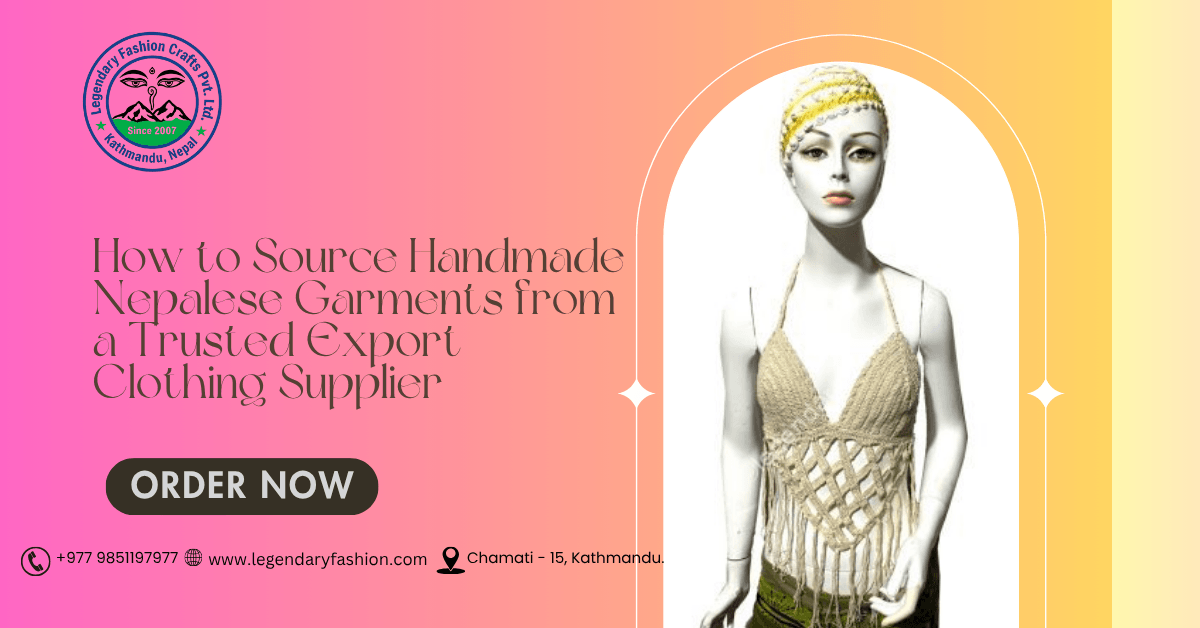
The global fashion market is witnessing growing demand for handmade garments that offer authenticity, quality craftsmanship, and ethical production. Consumers are increasingly drawn to clothing that reflects artisanal skills, sustainable manufacturing practices, and unique cultural influences. As a result, fashion brands, wholesalers, retailers, and importers are actively seeking trusted suppliers that can provide high-quality handmade apparel.
Nepal has become one of the most sought-after destinations for sourcing handmade garments. Known for its rich textile traditions, skilled artisans, and commitment to craftsmanship, the country offers exceptional opportunities for businesses looking to build distinctive fashion collections.
However, successfully sourcing handmade Nepalese garments requires careful planning and selecting the right export clothing supplier. This guide explains the sourcing process, key factors to consider, and why Legendary Fashion Crafts has become a trusted partner for global fashion brands seeking handmade apparel from Nepal.
Why Handmade Nepalese Garments Are Gaining Global Popularity
Handmade clothing offers several advantages over mass-produced garments. In a competitive retail environment, brands are constantly looking for products that provide uniqueness and higher perceived value.
Nepalese handmade garments are valued for:
- Skilled craftsmanship
- Attention to detail
- Authentic designs
- Sustainable production methods
- Cultural influences
- Premium quality finishes
- Ethical manufacturing practices
These qualities make handmade apparel attractive to boutique fashion labels, sustainable brands, online retailers, and specialty clothing stores worldwide.
Understanding the Handmade Garment Industry in Nepal
Nepal has a long history of textile production and artisan craftsmanship. Generations of skilled workers have preserved traditional garment-making techniques while adapting to modern fashion requirements.
Today, Nepal’s garment industry serves both local and international markets through:
- Handmade clothing production
- Sustainable fashion manufacturing
- Private label garment services
- Custom apparel development
- Wholesale garment exports
Many manufacturers combine traditional handcrafting techniques with professional quality control systems to meet international standards.
Benefits of Sourcing Handmade Garments from Nepal
Exceptional Craftsmanship
Nepalese artisans are known for their precision and dedication to quality. Handmade garments often feature superior stitching, detailed finishing, and careful construction that distinguish them from factory-produced alternatives.
Unique Product Offerings
Fashion brands can offer exclusive collections that stand out in crowded markets. Handmade garments provide individuality that appeals to customers seeking distinctive clothing.
Sustainable Production
Many Nepalese manufacturers prioritize environmentally responsible practices and sustainable materials, making them ideal partners for eco-conscious brands.
Ethical Manufacturing
Responsible labor practices and artisan empowerment are often integral parts of Nepal’s handmade garment sector.
Flexible Customization
Handmade garment manufacturers frequently provide greater flexibility in design modifications, material selection, and branding compared to large-scale mass production facilities.
Step 1: Define Your Product Requirements
Before approaching suppliers, clearly define your product needs.
This helps streamline communication and ensures manufacturers can accurately evaluate your project.
Key considerations include:
Garment Categories
Determine the types of products you want to source, such as:
- Dresses
- Tops and blouses
- Jackets
- Hoodies
- Cotton apparel
- Hemp clothing
- Sustainable fashion products
Target Market
Understand your target customer preferences, pricing strategy, and product positioning.
Material Preferences
Identify whether you require:
- Cotton fabrics
- Organic cotton
- Hemp textiles
- Natural fibers
- Sustainable materials
Production Volumes
Estimate your order quantities to ensure the supplier can meet your production requirements.
Step 2: Research Export Clothing Suppliers in Nepal
Not all garment manufacturers offer the same level of expertise, quality, or export capabilities.
When evaluating suppliers, consider the following factors.
Industry Experience
Manufacturers with extensive experience are generally better equipped to handle:
- Product development
- Custom manufacturing
- International quality standards
- Export documentation
- Production planning
Product Portfolio
Review the supplier’s previous work to assess:
- Design quality
- Construction standards
- Product variety
- Finishing details
A strong portfolio demonstrates manufacturing capabilities and craftsmanship.
Client Reviews and Reputation
Positive feedback from previous clients can provide valuable insight into reliability, communication, and product quality.
Step 3: Evaluate Manufacturing Capabilities
A reliable export clothing supplier should have the resources and expertise necessary to deliver consistent results.
Skilled Workforce
Handmade garment production depends heavily on artisan skills.
Assess whether the supplier employs experienced:
- Tailors
- Pattern makers
- Sewing specialists
- Quality inspectors
Production Capacity
Ensure the manufacturer can handle your current and future order volumes without compromising quality.
Sampling Services
Professional suppliers provide samples before bulk production.
Samples allow you to evaluate:
- Fabric quality
- Design execution
- Fit and sizing
- Construction standards
- Finishing quality
Sample approval is an essential step in the sourcing process.
Step 4: Verify Quality Control Procedures
Quality control plays a critical role in successful garment sourcing.
A trusted supplier should maintain inspection processes throughout production.
Key quality checkpoints often include:
Fabric Inspection
Raw materials should be examined for consistency, defects, and compliance with specifications.
Production Monitoring
Regular inspections during manufacturing help identify and resolve issues early.
Finishing Evaluation
Final inspections ensure garments meet design, sizing, and construction requirements.
Packaging Verification
Proper packaging protects products during international shipping and enhances customer satisfaction.
Step 5: Assess Ethical and Sustainable Practices
Modern consumers increasingly value transparency and responsible sourcing.
Working with ethical manufacturers helps strengthen brand credibility and customer trust.
Ethical Labor Standards
Look for suppliers that support:
- Fair wages
- Safe workplaces
- Respectful working conditions
- Responsible employment practices
Sustainable Manufacturing
Environmentally conscious manufacturers often focus on:
- Waste reduction
- Efficient resource usage
- Sustainable materials
- Eco-friendly production methods
These practices support long-term sustainability goals.
Step 6: Understand Export and Logistics Capabilities
Export experience is crucial when sourcing garments internationally.
A supplier familiar with global trade requirements can simplify the process and reduce risks.
Documentation Expertise
Reliable exporters understand the importance of accurate:
- Commercial invoices
- Packing lists
- Shipping documents
- Certificates of origin
- Customs paperwork
Shipping Coordination
Manufacturers with export experience can assist with logistics planning and shipment management.
This support helps ensure timely delivery and smooth international transactions.
Step 7: Build a Long-Term Supplier Relationship
Successful sourcing extends beyond a single order.
Long-term partnerships often provide benefits such as:
- Better communication
- Improved production efficiency
- Consistent quality
- Faster development cycles
- Greater customization flexibility
Maintaining strong supplier relationships can contribute significantly to business growth.
Why Legendary Fashion Crafts Is a Trusted Export Clothing Supplier
Legendary Fashion Crafts has established itself as a reliable manufacturer and exporter of handmade Nepalese garments.
The company serves fashion brands, retailers, wholesalers, and importers across international markets by delivering quality products and professional manufacturing solutions.
Expertise in Handmade Garment Production
The company specializes in handcrafted apparel that reflects Nepal’s rich textile heritage while meeting modern fashion standards.
Its capabilities include:
- Handmade clothing manufacturing
- Sustainable apparel production
- Custom garment development
- Private label services
- Wholesale garment exports
Strong Quality Assurance
Quality control procedures are implemented throughout the production process to ensure consistency and customer satisfaction.
Flexible Manufacturing Solutions
Legendary Fashion Crafts supports both emerging brands and established retailers through scalable production options.
Ethical Production Standards
The company values responsible manufacturing practices and artisan empowerment, supporting sustainable growth within the garment industry.
International Export Experience
With experience serving clients worldwide, Legendary Fashion Crafts understands the requirements of global apparel sourcing and export management.
Private Label Handmade Garment Manufacturing
Private label production allows brands to sell products under their own names while leveraging the expertise of experienced manufacturers.
Legendary Fashion Crafts offers comprehensive private label services, including:
- Product development
- Custom labeling
- Packaging customization
- Fabric sourcing
- Brand-specific production
This enables businesses to launch distinctive fashion collections without investing in their own manufacturing facilities.
Common Mistakes to Avoid When Sourcing Handmade Garments
Prioritizing Price Over Quality
Selecting the lowest-cost supplier can lead to quality issues and customer dissatisfaction.
Focus on value, reliability, and craftsmanship rather than price alone.
Skipping Sample Approval
Samples help identify potential concerns before full production begins.
Never proceed directly to bulk manufacturing without sample evaluation.
Ignoring Communication Quality
Clear communication is essential for successful sourcing relationships.
Delays or misunderstandings during initial discussions may indicate future challenges.
Overlooking Export Experience
Manufacturers lacking export expertise may struggle with shipping requirements and documentation, leading to delays.
Conclusion
Sourcing handmade Nepalese garments offers fashion brands a valuable opportunity to access authentic craftsmanship, sustainable production, and unique apparel collections. However, success depends on selecting a trusted export clothing supplier that can consistently deliver quality, reliability, and professional service.
By carefully evaluating manufacturing capabilities, quality control procedures, ethical standards, and export experience, businesses can establish productive sourcing partnerships that support long-term growth.
Legendary Fashion Crafts stands out as a trusted export clothing supplier in Nepal through its commitment to handmade craftsmanship, sustainable manufacturing, quality assurance, and customer-focused solutions. For brands seeking premium handmade garments and reliable export services, the company provides the expertise and support necessary to succeed in today’s competitive fashion market.
Frequently Asked Questions (FAQs)
1. Why are handmade Nepalese garments popular internationally?
They are valued for their craftsmanship, unique designs, ethical production methods, and high-quality construction.
2. What types of handmade garments can be sourced from Nepal?
Popular products include dresses, tops, jackets, hoodies, cotton apparel, hemp clothing, and sustainable fashion collections.
3. How can I find a reliable export clothing supplier in Nepal?
Evaluate experience, quality control systems, product portfolios, client reviews, export capabilities, and communication practices.
4. Does Legendary Fashion Crafts offer private label manufacturing?
Yes, the company provides private label garment production, custom branding, labeling, and packaging services.
5. Why is sampling important before placing a bulk order?
Samples allow buyers to verify quality, sizing, fabric selection, design execution, and overall product standards.
6. Can handmade garments be customized?
Yes, most handmade garment manufacturers offer customization options for design, fabrics, sizing, and branding.
7. What materials are commonly used in handmade Nepalese garments?
Common materials include cotton, organic cotton, hemp, natural fibers, and sustainable textiles.
8. How does Legendary Fashion Crafts ensure product quality?
The company follows structured quality control procedures, including fabric inspections, production monitoring, and final evaluations.
9. Does Legendary Fashion Crafts export garments internationally?
Yes, the company serves international clients and supports global garment exports.
10. What makes Legendary Fashion Crafts a trusted export clothing supplier?
Its expertise in handmade garments, ethical manufacturing practices, customization services, quality assurance systems, and international export experience make it a preferred choice for global buyers.