
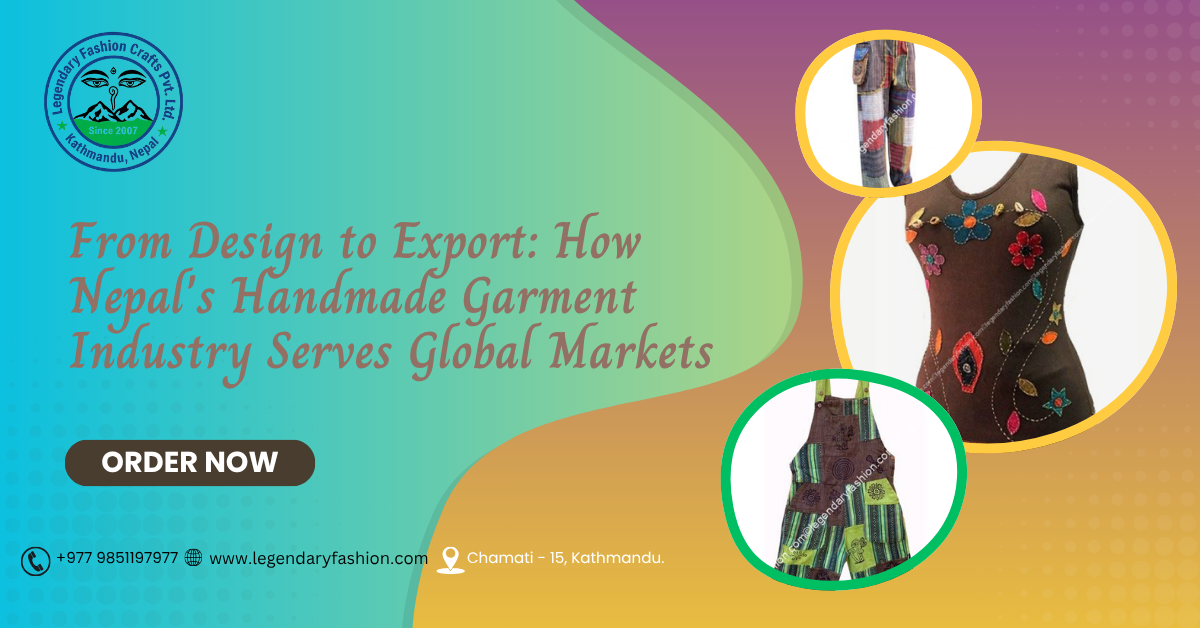
The global fashion industry is experiencing a noticeable shift toward authenticity, sustainability, and craftsmanship. Consumers are no longer interested only in mass-produced clothing. They increasingly value handmade garments that carry cultural significance, ethical production methods, and exceptional quality.
Nepal has become an important destination for handcrafted apparel, offering a unique combination of traditional artistry and modern manufacturing standards. From skilled artisans creating intricate embroidery to exporters delivering premium handmade garments across Europe, North America, Australia, and Asia, Nepal’s garment industry has built a strong reputation in international markets.
At Legendary Fashion Crafts, this journey begins with thoughtful design, continues through skilled craftsmanship, and ends with reliable global exports. Every garment represents generations of expertise while meeting the quality expectations of international buyers.
This article explores how Nepal’s handmade garment industry transforms creative ideas into export-ready products that serve fashion brands and retailers worldwide.
The Heritage Behind Nepal’s Handmade Garment Industry
Nepal’s textile and garment traditions date back centuries. Local communities have preserved weaving, stitching, embroidery, knitting, and dyeing techniques that continue to influence modern apparel manufacturing.
Unlike large-scale automated factories, many handmade garment producers combine traditional craftsmanship with professional production processes. This balance allows businesses to maintain authenticity while meeting international quality standards.
The country’s artisans are known for their attention to detail, patience, and ability to create garments that showcase both creativity and durability. These strengths have helped Nepal become a trusted sourcing destination for handmade clothing.
Why Handmade Garments Are in High Demand Worldwide
Global consumers are becoming more conscious about how their clothing is made. Handmade garments appeal to buyers because they offer qualities that factory-produced apparel often cannot replicate.
Some of the main reasons for this growing demand include:
- Unique designs with handcrafted details
- Higher attention to quality
- Ethical production practices
- Sustainable manufacturing methods
- Cultural authenticity
- Limited production that increases exclusivity
Fashion brands that prioritize responsible sourcing often choose Nepalese manufacturers because they value craftsmanship alongside modern production capabilities.
The Design Process: Turning Ideas into Beautiful Garments
Every successful garment begins with a carefully planned design.
For export manufacturers like Legendary Fashion Crafts, the design process involves close collaboration with clients to understand their requirements, target audience, fabric preferences, and branding goals.
The process generally includes:
Understanding Client Requirements
International buyers may provide:
- Technical design sheets
- Sample garments
- Sketches
- Mood boards
- Fabric specifications
- Size charts
The production team studies every detail before moving to development.
Sample Development
Once the design is approved, experienced artisans and technicians create initial samples.
These prototypes help evaluate:
- Fit
- Fabric behavior
- Stitch quality
- Embroidery placement
- Color combinations
- Overall appearance
Necessary adjustments are made before production begins.
Material Selection
The choice of materials directly affects the final product.
Depending on customer requirements, manufacturers select premium fabrics such as:
- Cotton
- Organic cotton
- Hemp
- Linen
- Wool
- Fleece
- Cotton blends
- Handwoven textiles
Accessories like buttons, zippers, labels, drawstrings, and trims are also selected carefully to maintain consistent quality.
Skilled Craftsmanship Makes Every Piece Special
The defining feature of Nepal’s garment industry is its skilled workforce.
Many artisans learn their craft through years of practical experience, allowing them to produce garments with remarkable precision.
Handmade production often includes:
- Hand embroidery
- Decorative stitching
- Hand finishing
- Patchwork
- Appliqué work
- Knitting
- Crochet
- Fabric detailing
Even when modern sewing equipment is used, much of the finishing work remains handcrafted, giving every garment a distinctive appearance.
Quality Control Throughout Production
International buyers expect consistency across every shipment.
To achieve this, reputable manufacturers implement quality control procedures at every production stage.
Typical inspections include:
Raw Material Inspection
Fabrics are checked for:
- Color consistency
- Fabric defects
- Weight
- Shrinkage
- Texture
In-Process Quality Checks
During production, supervisors inspect:
- Stitch quality
- Measurements
- Seam strength
- Pattern alignment
- Embroidery accuracy
Final Inspection
Before packaging, each garment undergoes a final review to ensure it meets customer specifications.
Only approved products move forward for export.
Ethical Manufacturing Supports Long-Term Growth
Ethical manufacturing has become one of the most important factors for international fashion buyers.
Nepal’s handmade garment sector increasingly focuses on responsible production by promoting:
- Fair wages
- Safe working environments
- Skill development
- Gender inclusion
- Community employment
- Respect for traditional craftsmanship
These practices strengthen buyer confidence while supporting sustainable economic development.
Sustainability in Nepal’s Handmade Garment Industry
Sustainability has become a major purchasing factor for fashion brands worldwide.
Many Nepalese garment manufacturers actively reduce environmental impact through responsible production practices.
These efforts often include:
Natural and Sustainable Fibers
Many producers work with environmentally friendly materials such as:
- Organic cotton
- Hemp
- Wool
- Linen
These fibers generally require fewer resources than synthetic alternatives.
Reduced Waste Production
Efficient cutting techniques help minimize fabric waste.
Some leftover materials are repurposed into accessories, trims, or smaller handcrafted products.
Durable Products
Handmade garments are designed to last longer, reducing the need for frequent replacement and supporting responsible consumption.
Export Standards That Meet Global Expectations
Exporting garments requires much more than producing attractive clothing.
Manufacturers must comply with strict international standards related to quality, documentation, packaging, labeling, and shipping.
Professional exporters prepare:
- Commercial invoices
- Packing lists
- Certificates of origin
- Export declarations
- Product labeling
- Carton specifications
Compliance with buyer requirements ensures smooth customs clearance and timely delivery.
Serving International Fashion Brands
Nepal’s handmade garment manufacturers supply products to clients across multiple industries.
These include:
- Fashion retailers
- Boutique brands
- Sustainable clothing labels
- Outdoor apparel companies
- Yoga clothing brands
- Lifestyle brands
- Fair trade organizations
- Private label businesses
Manufacturers often provide flexible production services, allowing brands to launch exclusive collections with customized designs.
Private Label and OEM Manufacturing
Many global buyers prefer private label manufacturing because it allows them to sell unique products under their own brand names.
Legendary Fashion Crafts supports clients with:
- Product development
- Sample creation
- Custom labels
- Custom packaging
- Brand-specific sizing
- OEM manufacturing
- Bulk production
- Export logistics
This end-to-end approach simplifies sourcing for international businesses.
Logistics and Global Shipping
Efficient logistics play an essential role in export success.
Once production is complete, garments are carefully packed to protect product quality during transportation.
Export partners coordinate shipments through:
- Air freight
- Sea freight
- Courier services
Reliable logistics ensure products reach customers safely and within agreed timelines.
Challenges Faced by Nepal’s Handmade Garment Industry
Like every manufacturing sector, Nepal’s garment industry also faces challenges.
Some common issues include:
- Rising raw material costs
- Global competition
- Changing fashion trends
- Transportation delays
- Skilled labor shortages
- International compliance requirements
Despite these challenges, Nepal continues to strengthen its position through quality craftsmanship, innovation, and customer-focused production.
Why International Buyers Choose Legendary Fashion Crafts
Finding the right manufacturing partner is essential for building a successful fashion brand.
Legendary Fashion Crafts combines traditional craftsmanship with modern production systems to deliver garments that meet international standards.
Clients choose the company because of its commitment to:
- High-quality handmade garments
- Skilled artisans
- Ethical manufacturing
- Flexible customization
- Reliable export services
- Competitive pricing
- Consistent quality control
- Strong communication throughout production
By maintaining high production standards and understanding international market expectations, Legendary Fashion Crafts has become a trusted partner for brands seeking authentic handmade apparel from Nepal.
The Future of Nepal’s Handmade Garment Exports
Global demand for sustainable and ethically produced fashion continues to grow. This creates significant opportunities for Nepal’s handmade garment industry.
Manufacturers are investing in improved production processes, advanced quality management, and innovative design while preserving traditional craftsmanship.
As more consumers seek clothing with authenticity, transparency, and lasting quality, Nepal is well positioned to become an even stronger contributor to the global fashion supply chain.
Businesses that value responsible sourcing and handcrafted excellence will continue to see Nepal as a reliable destination for premium garment manufacturing.
Conclusion
From concept development and material selection to skilled craftsmanship, quality control, and international shipping, Nepal’s handmade garment industry has established itself as a dependable supplier for global fashion markets.
Its ability to blend traditional artistry with modern manufacturing practices gives international buyers access to garments that are distinctive, durable, and ethically produced.
Legendary Fashion Crafts proudly represents this tradition by delivering high-quality handmade garments tailored to the needs of fashion brands, retailers, wholesalers, and private label businesses around the world. Through craftsmanship, reliability, and a commitment to excellence, the company continues to connect Nepal’s rich textile heritage with customers across global markets.
Frequently Asked Questions (FAQs)
1. Why is Nepal known for handmade garments?
Nepal has a long history of textile craftsmanship, skilled artisans, and traditional embroidery techniques. These strengths allow manufacturers to produce high-quality handmade garments that appeal to international buyers.
2. What types of handmade garments are exported from Nepal?
Nepal exports jackets, shirts, trousers, dresses, skirts, hoodies, knitwear, children’s clothing, workwear, fashion apparel, and customized private label garments.
3. What materials are commonly used in Nepal’s handmade garment industry?
Manufacturers commonly use cotton, organic cotton, hemp, linen, wool, fleece, cotton blends, and handwoven fabrics depending on customer requirements.
4. How do manufacturers ensure garment quality before export?
Quality checks are performed during fabric inspection, cutting, stitching, finishing, measurement verification, and final product inspection before packaging and shipment.
5. Can international brands request custom garment designs?
Yes. Many manufacturers, including Legendary Fashion Crafts, provide custom design development, sample production, private labeling, and OEM manufacturing services.
6. Are Nepal’s handmade garments sustainable?
Many manufacturers emphasize sustainability by using natural fibers, reducing production waste, promoting ethical labor practices, and producing durable garments designed for long-term use.
7. Which countries import handmade garments from Nepal?
Handmade garments from Nepal are exported to markets including the United States, Canada, the United Kingdom, Germany, France, Australia, Japan, and many other countries.
8. What industries buy handmade garments from Nepal?
Customers include fashion retailers, boutique stores, sustainable clothing brands, outdoor apparel companies, yoga wear brands, wholesalers, and fair trade organizations.
9. What is private label garment manufacturing?
Private label manufacturing allows businesses to sell garments under their own brand name while production is handled by an experienced manufacturer.
10. Why should businesses partner with Legendary Fashion Crafts?
Legendary Fashion Crafts offers skilled craftsmanship, custom manufacturing, ethical production practices, strict quality control, flexible order options, and dependable export services, making it a trusted partner for brands serving global markets.